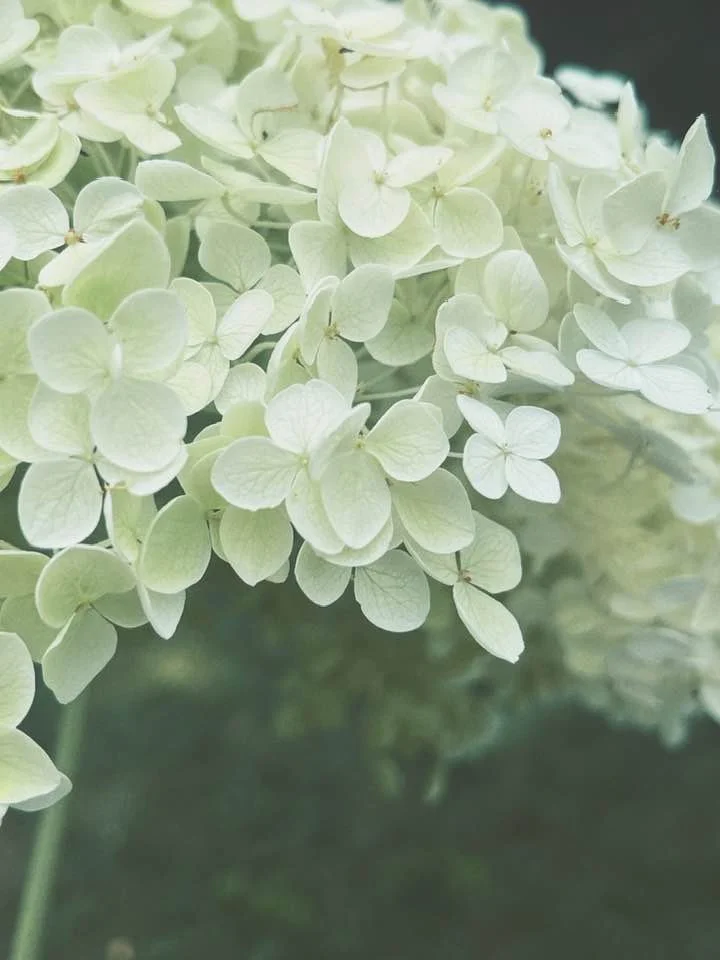
Reflection
The day the box arrived was one of the happiest days of my mother’s life. A woman who scrimped on herself in order that her family could have the things they needed had very little of luxury to her name. But that day she did.
Money was always tight in the years I was growing up. My father worked steadily, at his 9-5 job, sometimes on a weekend if there was a client he needed to see and as those were out of town contacts, a drive in the country afforded us the opportunity to see parts of southern Ontario in the territory my father covered as a paint representative to various hardware stores.
My mother was a stay at home mother until I was 12, and when she went back to work her wardrobe needs took second place to my father’s. Returning to office work meant needing to look not just presentable but in my mother’s eyes, hopefully, fashionably current. Clothing she would have had sitting in her closet was out of date by then and spending money on a new wardrobe would have been considered frivolous and unnecessary by my father (who was against the idea of her returning to work).
A few years before this next chapter for my mother, she taught herself, with the help of my step-grandmother who was a whiz with a sewing machine and a needle and thread, the basic fundamentals of sewing on a machine. A cousin provided her with a sewing machine she no longer used, having purchased a more current model for herself. The idea to sew hadn’t occurred to my mother until the day I asked her to make me an outfit from a pair of curtains that were hanging in our dining room. I liked the colours and the pattern and could “see” the outfit. I was only 11 years old so making the outfit myself didn’t seem possible, but I had seen my mother hem clothing, sew on buttons – surely she could do what I was asking. And she did. Then, confidence began to grow, she made a new set of curtains for the dining room (that did not become another outfit for me).
Making her own clothes I have come to realize gave my mother a sense of freedom and a sense of control that was lacking in her life up to that point. Earning money meant that she was contributing to the household, but it was also the opportunity to buy items that she couldn’t make herself as well as extras that she thought my sister and I would enjoy.
At the same time my mother was experiencing her reawakening, my father had received a promotion at a new company that offered a points system for sales and with those points, purchases of items were offered. My sister received a new bicycle. I got a tape recorder. My parents got a entire set of furniture for the living room and then the box arrived. The one my mother never thought she’d be able to have.
Everything was packaged so carefully in bubble wrap. And there were paper dividers as well as a protective case to keep everything in. It was the first set of expensive china – a place setting for 8 – that my mother ever had. And it was Royal Doulton – the epitome of taste and class in my mother’s eyes. Dinner plates, dessert plates, cups and saucers and a gravy boat. No bowls or coffee, creamer and sugar – just what you would need to feed eight people and after, offer a cup of tea or coffee.
My sister and I were told “do not touch” so often we were even nervous about using the dinner plates when they were put on the table. Helping to do the dishes after the meal was a nightmare whether you were washing or drying and often my mother would tell us to leave those dishes, she would do them herself. Blessed relief.
Not too long after these dishes arrived my parents separated and divorced. My mother got the Royal Doulton, though seriously, knowing how much it meant to her I’m surprised my father didn’t ask for custody. The Royal Doulton continued to be used at Christmas, Easter and any dinner parties she had for friends and family. It took pride of place on her table.
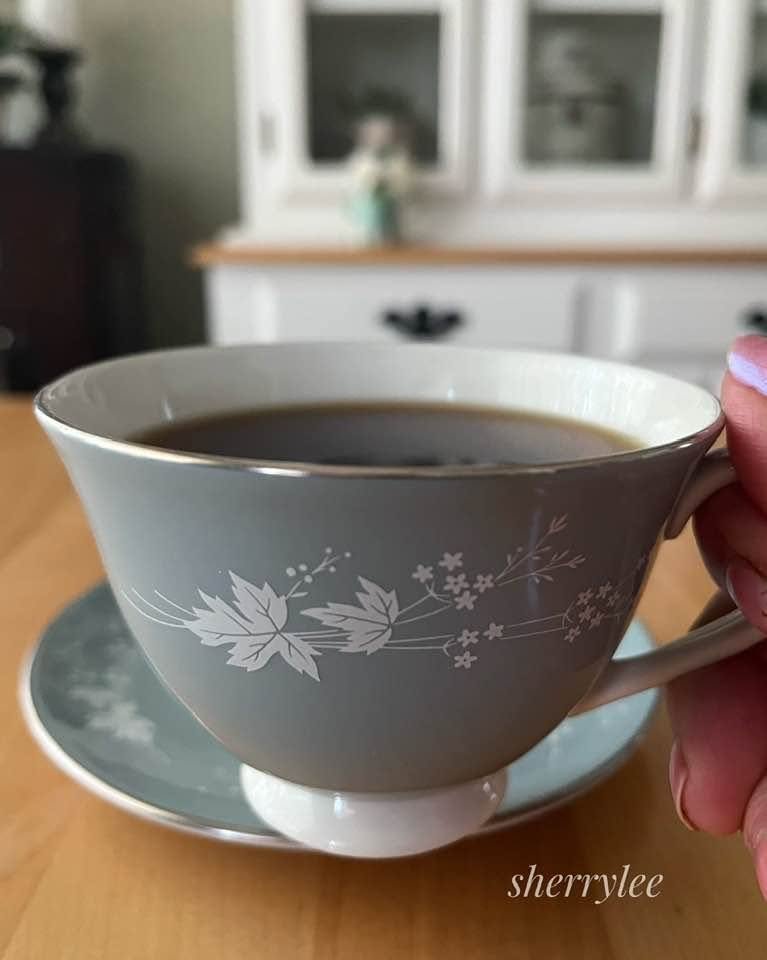
When my mother died, my sister insisted the Royal Doulton was to come to me as I was then married with my own family. Even knowing that I had no interest in expensive dinnerware, into my china cabinet it went and has been brought out on the occasions when I’ve hosted a meal. It happens less often now that my children are grown and living their own lives. I’m the invited more than the invitee.
I brought it out of the cabinet today – at least a cup and a saucer – to have my morning coffee in order to honour my mother whose birthday it would have been today. It brought back many fond memories and a lot of funny memories. And it’s made me reflect about what I’m going to do with this – eight cups & saucers, seven dessert plates, seven dinner plates, and a gravy boat. The gravy boat is used often – I like the way it pours. There have been a few mishaps, but I can still host seven people with it. If there are eight people, they at least get coffee and I’ll use a mismatched plate.
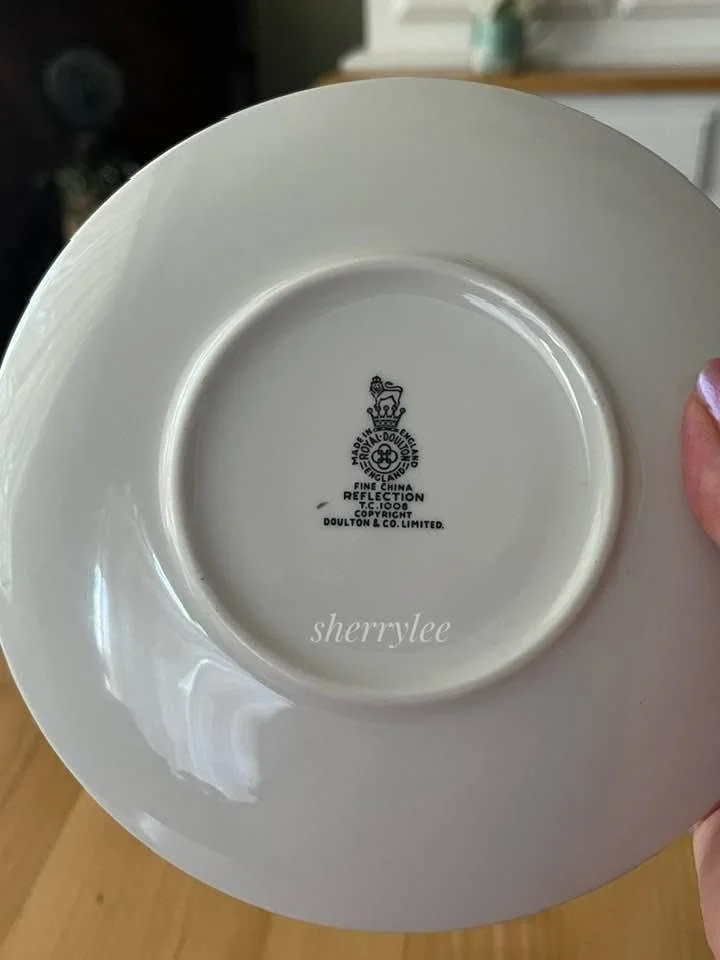
For the first time ever or in a very long time, today I looked at the bottom of the saucer to see what Royal Doulton called this pattern. How appropriate.
It’s called Reflection.
August Beauty
Only the first week into this month - August - the one that represents what we have come to associate with the final moments of summer.
We’ve had plenty of rain here in southern Ontario and the garden has benefitted from the drenching. The sunlight saying, “you see what we can do when we work together.”
Creating beauty.
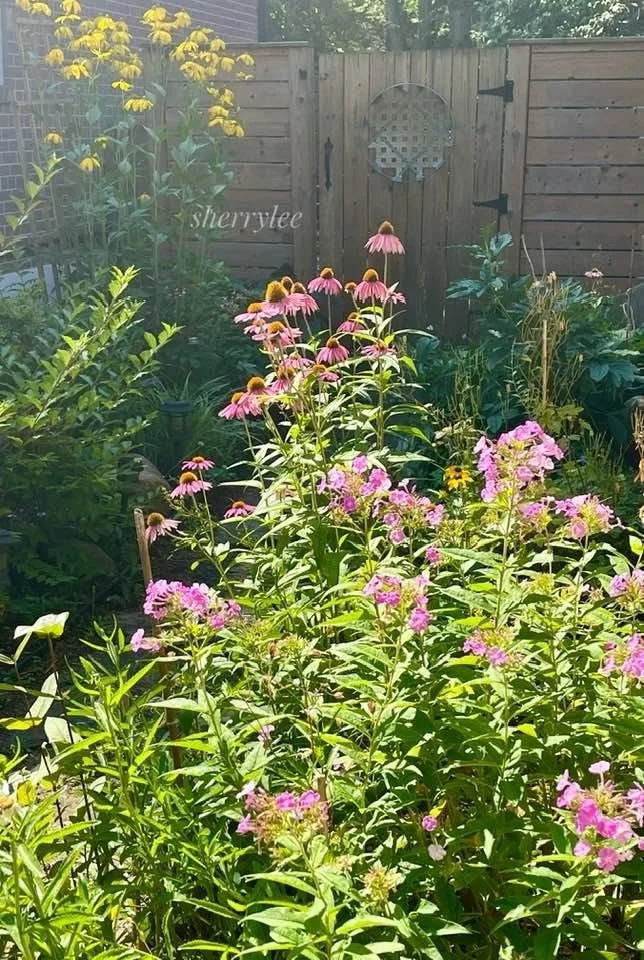
view of the side garden - August 5, 2026
The Power & Pleasure of Paint
I grew up surrounded by paint. Cans and cans of paint. Not artist’s paint, commercial grade paint. And empty cans filled with paint stir sticks, and brushes. The basement work bench carried an odor of turpentine and varsol. Colour chips graced the work bench and when new ones were issued by whichever company my father was a representative for at the time, I was allowed to use the old ones in my childish artistic creations. We even had a paint mixing machine. I was allowed to use that with supervision if there was leftover paint and I wanted to see what colour combinations I could create. Whatever I created I was given to paint on whatever I felt needed a new look, apart from my sister and the dog of course. Everything else, if it was mine, was fair game.
My sister and I were always allowed to choose the colour for our bedroom when a refresh was needed (needed or not it seemed to happen yearly) which could be tricky as we shared a room and our taste in colour varied greatly. The final decision often came down to a coin toss. The only time we agreed was when we wanted orange walls. Nothing soft like a peach, no we went into the industrial section of the colour chart and chose bright orange, traffic cone orange and with that we wanted a black ceiling. We had our hearts set on that combination. I was fourteen, she was eleven. Alas our creative vision ended up a wash with an empathic “no” from both parents and the walls ended up violet, the ceiling white. That one was not of our choosing. And it was the last time we shared a room that needed painting. Our parents divorced a few years after that and not only did our father leave, so did all that wonderful paint, and those delightful paint chips.
I’m happy when I’m painting. Certainly, in an artistic approach, however, objects and walls often need to be refreshed and when the mood strikes I’m either off collecting samples or digging through leftovers to see what I can produce. I’m not averse to applying a little alchemy and creating my own colours either.
A few weeks ago, it was a picture frame. Bought the item at an antique store years ago and as I’ve changed the colour and décor in the room where it hangs I keep trying to make the picture “fit” which has entailed painting the frame, being dissatisfied with it, sanding it, painting it again until I finally found some old paint in a barnwood brown that seems to be what I was looking for. For now.
Last week it was a candle holder. I had an idea about needing something midsize, round, a dark wood. I had the place for it and spent days looking for what I could see in my mind’s eye. Nothing doing. As often happens, I’ll picture something and only find it when I’ve moved on to another idea. But as I walked through the thrift store I saw a shape. I saw a size. I saw that it was ceramic and that it was a very bold shiny gold. Not what I wanted. But I picked it up anyway because I knew it had the potential to be what I was looking for. And if it wasn’t then I would donate it back to the thrift store and keep looking. It was worth a $4.00 gamble. And paint that I already had somewhere in my collection.
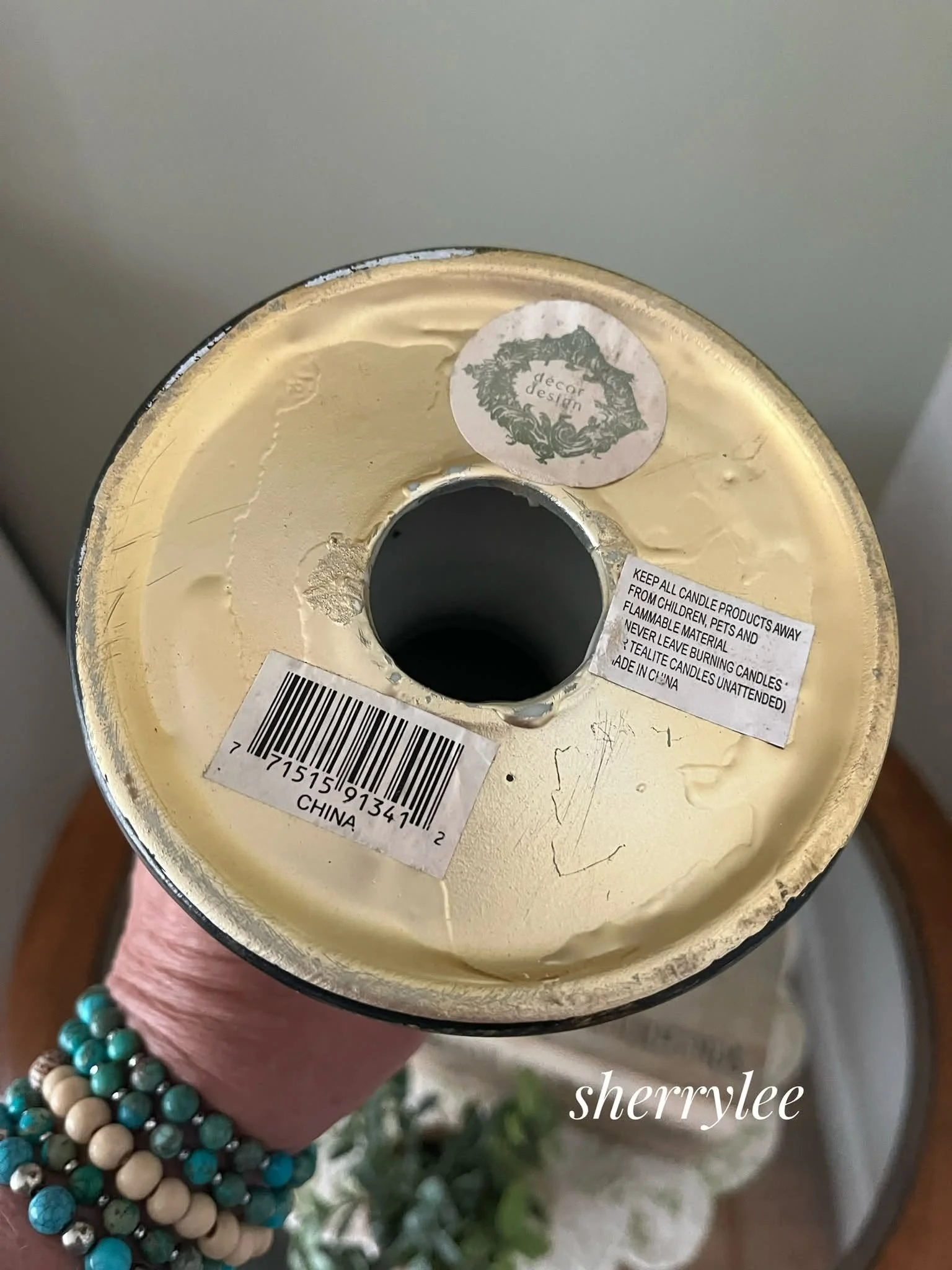
After sanding parts of the candle holder to remove the shine and giving it a bit of a worn, old patina, I began to apply paint. I started with a coat of black. Once that was dry I went in with brushed antique gold, dabbing it on with a sponge brush, smoothing it and then rubbing it off in spots with a soft cloth.
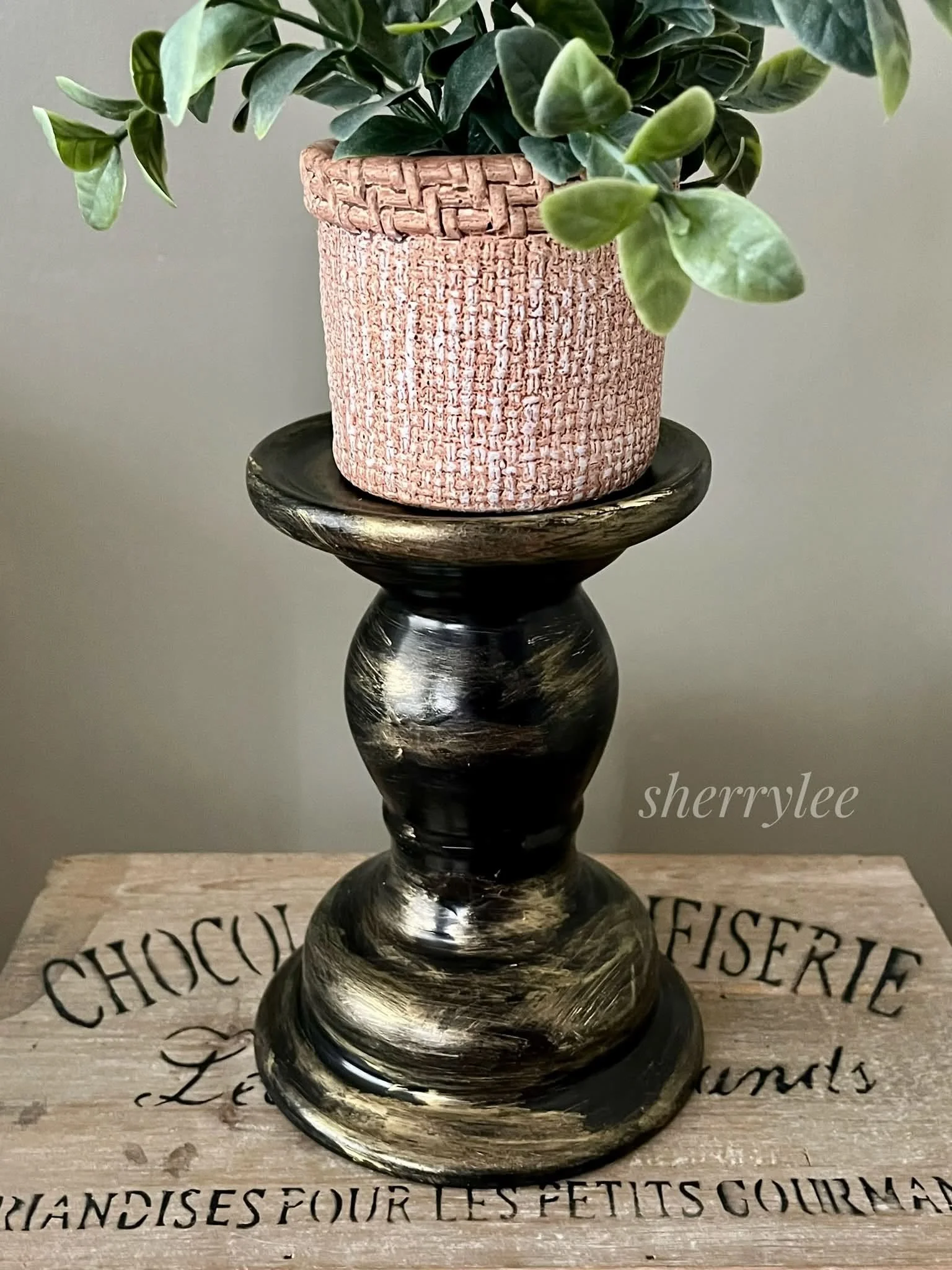
It’s still ceramic and if I drop it, it’s sure to break. It doesn’t look like the wood I envisioned, but it does look old. I like that I can still see marks that were left from the sandpaper. It looks like it was meant to look and as I placed something on top to see if it was going to work I put down the soft cloth, stood back, hands on hips and said, “you’re exactly what you need to be.” For now.
When the Muse Stings
A creative moment can strike like a spark from a flint, whether you light it yourself or that moment steps up and introduces itself to you.
Every morning as I’m preparing my coffee I think about what the day might hold. I assess my mood, my plans, and let my thoughts drift as I’m standing idly scooping out the coffee from the cannister and waiting for the boiling water to turn the granules into that liquid elixir. I decide which mug I’m going to use before I even begin the ritual. There’s usually no planning in that – it’s an instinctive look over the collection and my hand reaching for the one that feels right for that day. If I’ve woken with an idea, my choice is made because of that – what message I am wanting to convey with images and words. The creativity works both ways – will the mug dictate the message or will the message dictate the mug.
Photography for me isn’t simply aiming my phone or my camera and beginning to snap. It’s thinking about composition and colour and trying to create a vignette that will help me to tell a story. Still, there are times when it’s just snap and go because I’ve seen what I needed or wanted and there’s little more I can do to make it better. For every one photograph I use I might take 5 or 10 or 20. I’ve been known to take more.
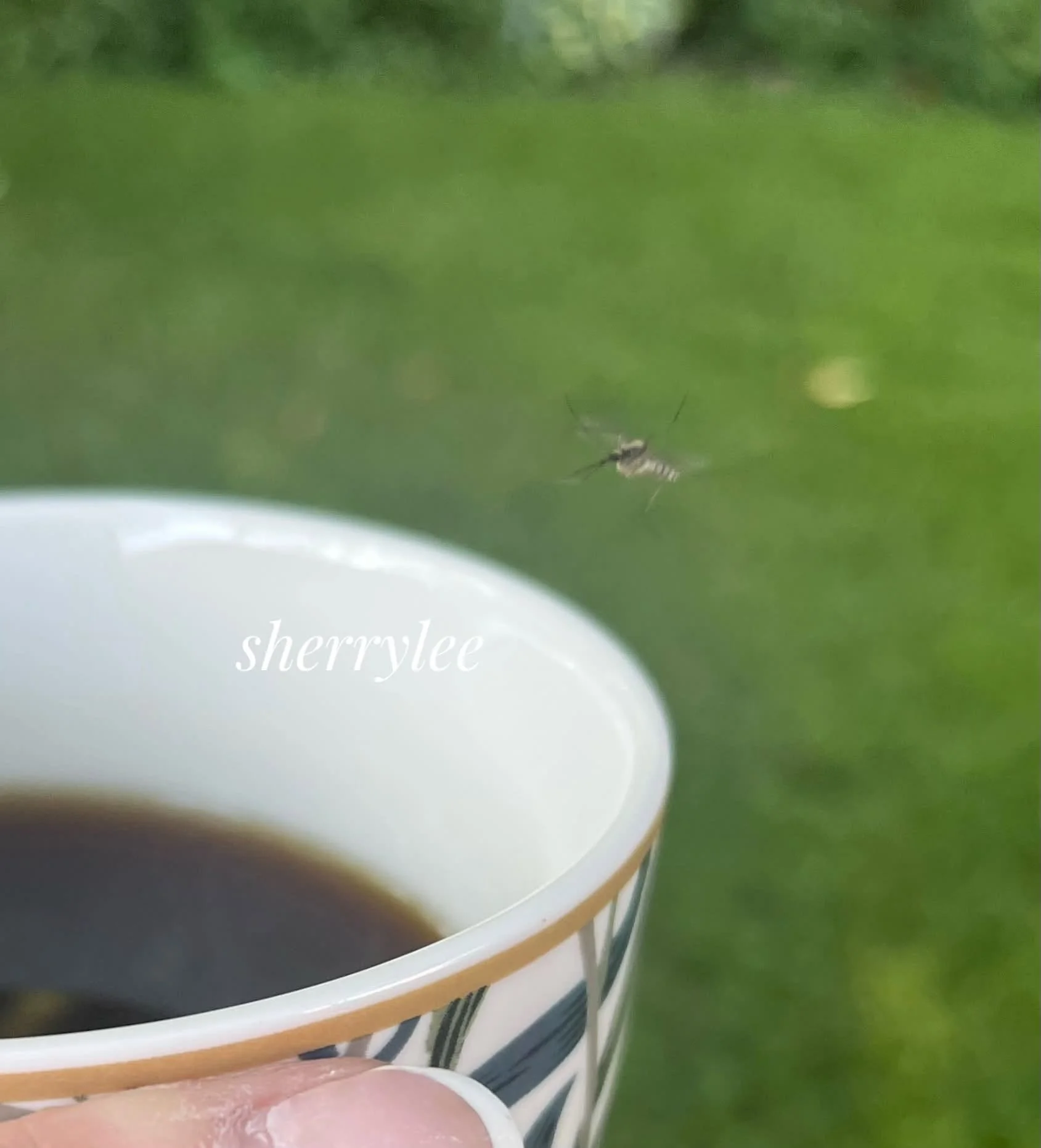
And then I meet a morning like today. And the mug doesn’t matter. And setting up and styling and looking for the sunlight or the background is inconsequential because what I was meant to share came flying into my frame, closing in on my face.
I didn’t even realize what was coming towards me. I had a thought about what I was trying to do and as I raised my phone to take the shot, my hand moved a little because the coffee mug was too hot the way I was holding it. As my hand shook and my thumb snapped the shot as it was, I realized that an annoying mosquito was flying into my face. Instinctively, when I waved my phone to move it away, that pest took a nosedive right into my coffee. I did “rescue” it by scooping it out, but it was beyond saving. So was the coffee.
After I poured fresh coffee, I looked through the photos and the last one I took, the unplanned photo, the one where the mosquito was zooming in with radar precision, thinking it had found a host to drill its stinger into, I began to laugh, because that was the story. That was the shot and while the mosquito isn’t clearly defined because it was mid flight it was everything I felt like saying this morning.
Keep your eyes open and watch your surroundings because you never know when something is coming along to smack you in the face – be it an insect – or inspiration. Creative ideas often flow best when you don’t overthink – or get to finish that first cup of coffee.
Winging It
My time spent over coffee in the morning offers me the opportunity to look ahead to the day – how it might unfold, what I might need to do or where I need to be. On some mornings I know there is a schedule to I need to keep – appointments, expectations, plans made to spend time with others and so planning for that becomes necessary. It helps to avoid overlap and the potential of “forgetting” something I had arranged well in advance. Other days there’s more freedom to see where I find myself. Those days give me the most opportunities for discovery and the best moments for creativity.
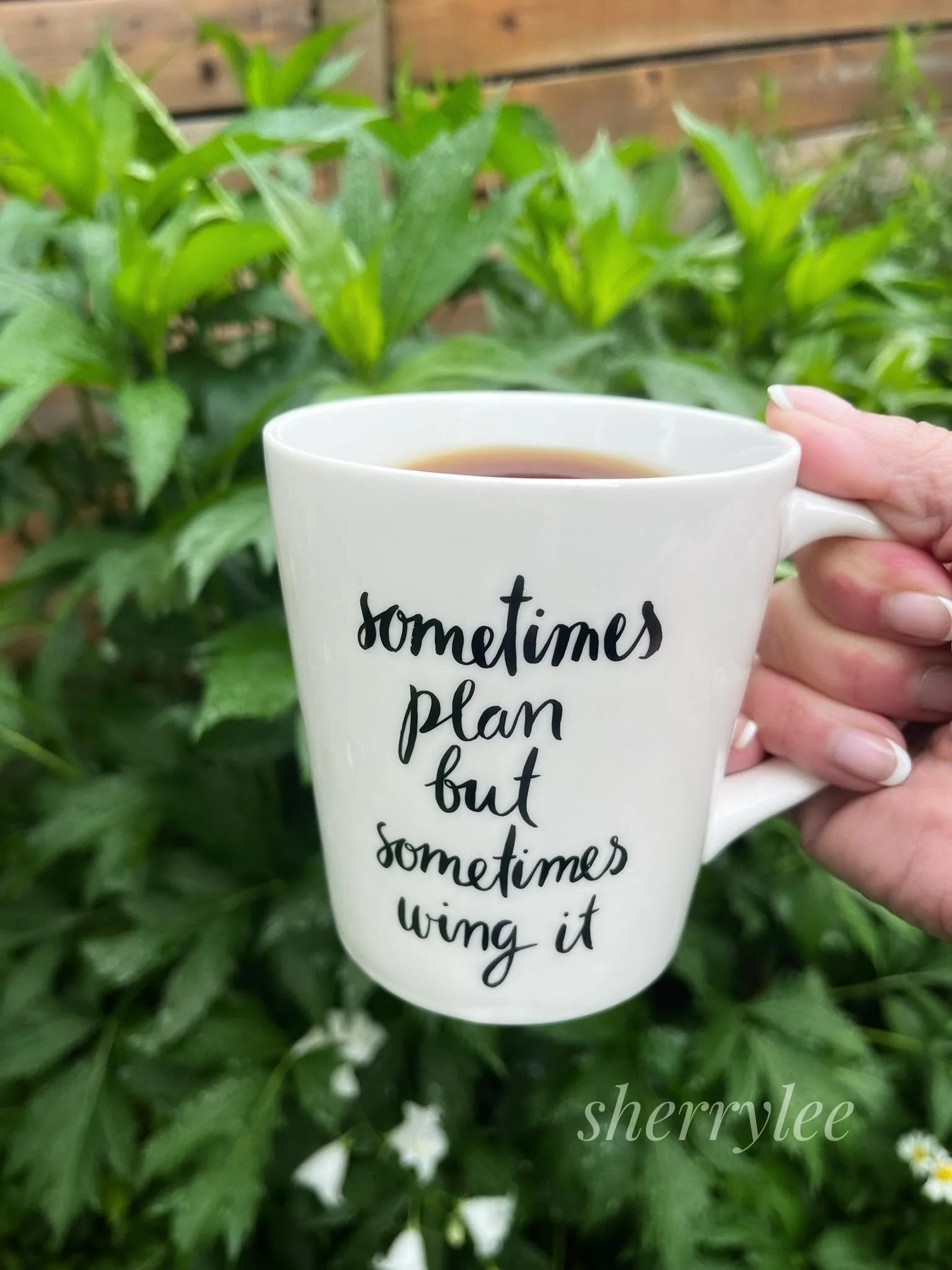
Looking at the coffee mug I used this morning sent me off on thoughts of the times I’ve decided to wing it and just see what would happen. And the times I’ve just gone with the flow and realized that having a plan might have been the better decision. Life’s like that. But there’s no doubt in my mind that when I wing it some of the most thoughtful, creative moments show themselves to me. Because I get out of my own way and don’t force words, or the images I’m trying to create whether through film or with art supplies. There’s a creative freedom that comes from saying “let’s just see where this goes.”
Earlier in June, I was asked to make a speech at a wedding. I’m comfortable with speaking in public when the audience is smaller, friendlier. I asked what this speech was to be about and was told in a dry tone of voice “well, it’s not open mic night.” There was no need to remind me of that – though to be honest there is always the possibility I could go off on a tangent. But I didn’t.
When called upon, I took to the floor, thanked the master of ceremonies for the microphone, and started speaking. I wrote no speech though I was asked periodically before the wedding if I had done so. I did lead off with the open mic night comment as an ice breaker – and because I thought it was charming and warm and would help to put the guests in a relaxed frame of mind. And when I spoke, I did so from the heart. Just the things I felt, that felt right in the moment. I didn’t speak for long. I kept it short and to the point. As I spoke, I looked around the room and at the head table and I saw smiles and I heard laughter and gauged from that – this must have been the right note to strike.
Later in the evening there were people who complimented me on that speech, amazed when asked and I replied that I hadn’t written it beforehand – which surprised even me as I’m a writer. Writing isn’t just what we put down on paper (or a computer screen) – it’s how we form our thoughts and how we express ourselves. How often do we write something in our head that may or may not see the light of day?
The downside for me in not having put pen to paper is that I have no lasting record of that speech. I have no recollection of all the things I said – just smatterings and phrases and a few of the more poignant words I used. It might have been the best speech I’ll ever have given in my life.
I know this though. What matters isn’t what I said – it’s the smiles on the faces of those in the room, of those I was speaking about and to. The feelings I was expressing came from somewhere deeper inside me than I realized and by winging it, I allowed myself the freedom to be my most authentic self, to work with the love and the energy in the room.
And yes, I did allow for a moment of laughter. Open mic night or not.
Father’s Day
Reading all the loving tributes to fathers yesterday on social media I couldn’t help but feel mixed emotions. Happy for those who have such loving men in their lives, those who have been guided throughout life by good men who taught them how to be self-assured, learned, and able to navigate in the world as adults. They were messages of love and gratitude. There were tributes to fathers who have passed, sweet childhood memories reflected on, and photos shared of happy times. There were messages of gratitude about men who stepped in to be surrogate fathers.
And I wished I could do that as well. But it was not my experience with the father that gave me life. Our relationship was one of control and manipulation. Love and respect were absent even when we called out to please be present.
The father I had might have been doing the best he could raising two daughters. He might have been parenting the way his own father did. Or he might have just been that individual who was more self-involved and needing to be in control of his own life that he placed me and my sister at the bottom of the list of what needed attention and care. He left the parenting to our mother, but when he didn’t like something he stepped into the “I’m your father” mode and made his presence felt.
My father, like everyone, made mistakes in his life but never admitted to any of them, never tried to make an apology or seek forgiveness. He did his best to keep us small so that in comparison his own life looked larger, bigger, more important. He belittled our attempts and our dreams and sadly, because at one time we looked up to him, we believed him.
And the day came that broke his daughters’ faith in him as a man to be admired, to be listened to, to learn from. We learned that he was never going to be someone we could rely on other than to put food on the table, give us a roof over our heads and clothes on our backs.
It caused me to break from him completely to save myself and to create a future where I learned to be a father to myself. It wasn’t easy and it took many years. I’ve often thought it might be the reason I became the mother of sons, not daughters. That it was a gift for me to break chains to raise good men who know what it would mean to raise another generation with the ability to make mistakes, and to own those mistakes. But to live their lives with love, with respect and with the ability to give those things to others rather than simply make their way through life by taking.
Circumstances in life can and will present us with challenges where we face hurdles and dead ends from time to time. If we’re lucky we learn how to make our way around, over and through obstacles even if we’ve never had the role model we wanted and deserved to teach us how to do that.
How Many Sleeps?
As the excitement of a special occasion neared – a birthday, a vacation trip, a visit to the zoo – whatever the promised event, the countdown with my children of “how many sleeps?” would begin in earnest about a week prior. This was a family tradition I wanted to start with my sons to signal to them that I was as excited as they were about an adventure – large or small – that we would share together.
Any sooner than a week out would be too much for them at younger ages to absorb. Too many sleeps to count posed the possibility of it seeming to take forever and that the date would never arrive. One week? That was well within the window of “this is coming, this is happening and it won’t be long now” for them to conceptualize.
I’m the chain breaker in my family. I’ve used bolt cutters for the bigger links and tin snips for the smaller bits that don’t take as much effort and energy. Some I was able to snap with my bare hands. From where I sit right now, today, the links are in pieces, scattered around me and I look upon them with pride. Breaking old habits, breaking toxic family bonds and abusive behaviour can take years. Some people never manage it, perhaps because they’ve never wanted to and the patterns repeat. Some have tried and for reasons known only to them have been unable to complete the task. I am among the many who have taken a sledgehammer to generations of repetitive negative, narcissistic behaviour and created a new path forward.
There are countless stories about the ways in which each of the chains were dismantled and the whys for which that needed to happen. Today it’s about excitement being allowed to build, being denied and despite all evidence to the contrary, always hoping the next time would be different. The power of one parent to control outcomes. To offer his children a treat, to watch them become excited and then pull that treat back and say “no, not today.”
I learned long before my sister did how to manage this kind of control. After too many incidences of a promise not being kept and no rational explanation given other than “I don’t feel like it today”, “I’ve changed my mind” or “I don’t think you’d enjoy it all that much.” And then a smirky smile that showed us there had never been any intention of following through with the promise. More fools us. The day came when I’d had enough.
The day, at age 11 or 12 when I knew I could control the situation. By not caring. By showing indifference. It took time and patience to convince my younger sister to follow my lead, but she did. The next time we were told we’d be headed for a day trip to the beach and listing all the things we’d be able to do, we were asked “Doesn’t that sound like fun? Would you like that?” I simply shrugged and asked if that’s what he wanted to do but said I didn’t care if we went or not. The air changed. The look on his face was one of surprise and puzzlement. A little further egging on from him to try and elicit some excitement that he’d be able to stamp out was a wasted effort. We did take that trip to the beach because he wasn’t going to be rewarded with our disappointed faces. True, he could still have changed his mind, but I played the trump card. I called his bluff.
I decided at that point that if I ever had children of my own I would never lead them on that merry dance. And only an emergency that was out of anyone’s control would change plans that had been made.
Thus the “sleeps countdown” was born. And the joy on their faces as we’d discuss what we would do when we got to where we were going made it worthwhile.
Being able to come through for children when you’ve made any promise to them means you teach them that your word means something. That you can be trusted. Those promises are worth keeping.
We’ve created a new kind of chain – one that’s made of love and respect. It bends and moves with us. One that is worthy of being continued with future generations.
I’m “counting sleeps” right now as I wait for one of those children to arrive home from the life he’s made for himself in another country over the ocean. He’s counting them too.
You Wear It Well…But
The woman is standing in front of a mirror (speaking to a camera really), assessing how she looks in a dress she has chosen to wear to a company function. The fabric looks to be of a velvet blend, the style is form fitting and suits the woman, accentuating her figure. The colour is a deep shade of green, what I would call hunter green. This woman is over the age of 50. All the women in these ads are over 50. Target market.
Suddenly another woman appears in a split screen telling her that the dress she is wearing is all wrong for her. It doesn’t suit her. And she’s there to tell her why and that she can provide the solution to her problem. Problem.
I have seen this ad on Instagram more times than I care to. I’ve only watched it once, which was my first mistake because now that insidious algorithm knows where I am. But I’m not unhappy that I watched it because it’s given me much to think about regarding marketing and messaging and what it does to us psychologically. There has been a great deal of much needed, important discussion about social media and the ill effects, often tragic, it poses to young people. Adults are not immune.
There are multiple “commercials” created for this app and the scripts are used verbatim. In two separate ads that I have seen, a woman tells another woman how since she started dressing for her “type” her life has changed. Dramatically so. As she was walking down the street a man approached her and asked her the time – and he was holding a phone. Message? All it takes for you to be “seen” and noticed past the age of 50 is dressing for your type and suddenly men will be dropping like flies at your feet. Yes, my eyes have been doing some serious rolling.
The ad I’m talking about is for an app that tells a woman what style type she is and what clothing best suits her “archetype” right down to offering to put a wardrobe together for each woman – from wait for it – Amazon. Could be worse. Could be Shein.
A quiz is provided and upon completion (I completed the quiz for purposes of research but didn’t send it – hence being targeted now by the algorithm) you will be shown the light. As I didn’t send the form I have no idea which of these archetype categories I would have been slotted into. There are from what I have seen 5 archetypes (there might be more): Sage (which sounds like crone to me); Mother (I doubt aprons are involved but what do I know); Huntress (hopefully no quiver with a bow and arrow); Lover (Fredericks of Hollywood comes to mind); and Queen (slay!). I think they forgot to add Dupe.
Here we are in 2026 and there are and will be enough women who succumb to this ad to keep the app going. Women who lack confidence and are easily swayed by influencers for instance. You can still have a great deal of confidence and be swayed by an influencer – I attest to that myself (instant bronzing lotion comes to mind).
There are women who dress in ways that do not suit their bodies. But who is making that judgement? And if it’s me or you, why are we judging another woman for her choice of attire? If a woman feels that she looks good in what she is wearing and is dressing for herself – let her be. The only person anyone should ever dress for is herself – or himself. You have a favourite colour? Wear it. You like a particular fabric? Wear it. You like a certain style? Wear it. If you’re dressing to impress someone else – have another look in the mirror. People don’t gravitate to you because of what you’re wearing – they gravitate to confidence, charisma, a friendly smile and authenticity.
How you look in what you wear, how you carry yourself, how you feel about your body – that shines through in the confidence you exude. What you wear is an expression of who you are and following those guidelines is authentic.
If you feel you need advice on what looks good or what suits and there isn’t a good friend or relative to shop with you – find a store that has a personal shopper. They can help to bring out the best in you. But what you choose to buy is your choice and never just trust someone else’s opinion. At the end of the day the one who knows you best – is you. Not a personal shopper, certainly not an app, not a friend who might have ulterior motives (maybe you rock a really sexy dress and they wish they could but can’t because they lack confidence so they tell you that you can’t either – come to think of it, maybe that person isn’t such a good friend – don’t shop with that friend).
Back to where I started, with the woman in the hunter green dress. She was slaying in that dress. If she’d smiled and known in her soul that she looked good, maybe that other nosy ad rep actress would have kept her opinion to herself. The only good influencer lives inside you. Trust yourself.
Final words of advice. Make sure you can sit down comfortably in whatever you’re wearing. Walk around the store in a pair of shoes before buying – make sure they don’t pinch – you’ll be glad you did. If in the end your clothing choice passes your road test – take it for a spin. With a smile.
The Birthday Gift
My mother didn’t always deliver on her promises but there’s no doubt she tried.
When she told me I was going to be a big sister, 3 ½ year old me didn’t exactly understand what that meant but my mother made it sound like something I was going to be happy about. Or at least she hoped I would be.
Neither of my parents was a first born, they were both the “babies” in their families and were never supplanted by someone new knocking them off the perch of first, last and only. So, my mother wasn’t exactly coming from a place of experience about what a child goes through mentally and emotionally at being told – “move over and make room because someone else is moving in. And you’ll be happy about it.”
For months I was “primed” about what to expect when this blessed event occurred and I do recall asking questions, mostly as to when this was all going to happen and who was this person who would be sharing space with me – right down to the same bedroom.
Names were chosen by my parents to help me begin to accept the introductions before they were made, and as I couldn’t visualize what a sibling was going to look like I created an image of this Stephen Paul who would be part of my life. I was often reminded by my mother that it might not be Stephen Paul. It might be a Valerie Jean. I was torn because I had my heart set on a little brother. But if I had to have a sister then Valerie had a nice ring to it. I liked the name Valerie better than I liked my own.
The day came when my mother delivered that sibling to me. I had been taken to stay overnight with my mother’s best friend and her family – and their daughter who at the time was my best friend. On the morning of the 14th of May when I woke up, my father was sitting in the kitchen having coffee, waiting to tell me the news that the night before, my mother had delivered the baby, and I was now officially a big sister. In my partial excitement I wanted to know about Stephen Paul, only to be told that I didn’t have a brother, I had a little sister. Disappointed and switching gears as only a 3 ½ year old can I asked when I’d get to see Valerie Jean. Apparently there was no Valerie Jean either. To my shock I was told that there was an Arlene who was going to be very excited to meet me. Silence from me because in all the months of preparation leading up to this momentous news, I had no idea “what” an Arlene might be. Trust me, I soon found out.
The two of us were chalk and cheese. When she started talking she couldn’t say my name and I became “she-she” so I decided to call her “leenie”. Those names faded as we grew up but when either of us was frustrated with the other, we hurled those names at each other and then laughter would ensue ending whatever injustice we had suffered from at the other’s hands.

As children we were more often antagonists than friends but as we grew older into our young adult lives we became friends. We supported one another during tough times, and we cheered for one another during the successful moments. I was the dreamer; Arlene was the grounded one. We learned from each other in all the ways large and small. We never competed against one another and there were challenging times in our lives when we could have. Instead, we championed each other.
And then that little sister suddenly left this world at an age much too young, before we were able to discover what life would be like growing older together. The memories I do have sustain me. I speak Arlene’s name often, and I have kept her memory alive for my children.
Our shared memories stopped before I was ready to let go. I don’t think I’ve let go yet. I probably never will. She’s with me every day in so many ways. I feel her presence. I can still hear her laughter. I think of Arlene when certain songs are played. I can hear her whisper encouragement when I need it the most.
Today would have been my sister Arlene’s birthday. I have no gift to give but this homage to the person who bumped me off that perch and became my sidekick and my best friend. When she loved someone, did so with all her heart and entire being. People and animals. Arlene taught me from the day our mother placed her on my lap and in my arms how to give and receive love. She taught me to believe in myself when I needed it most. I hope our life together was an equal give and take. I hope she knows the impression she left on the great many people she met along her path who liked and respected her. And those who loved her to the moon and back simply because on that 13th day of May Arlene made her entrance into the world. And it was never the same again.
Sweet Serendipity
There is something sweet about serendipity, that moment when something unexpected happens, at just the right time, in just the right way, opening the door to that “meant to be” moment.
Two phone calls, two different days, with different intentions that focused on the same thing – my right breast and mammograms to tell a story about my body, and about my life.
May 4, 2005, I had a routine mammogram that morning and continued with my day. It was a day with possibility and as I sailed off into whatever was going to happen – would I get the job I’d interviewed for, I left that hospital (not a coincidence that the job was in a hospital) I noticed a cancer centre and said aloud as I drove past, “that’s where Wellspring is.” As if my subconscious was giving me a subtle clue as to what was awaiting me. Later that afternoon, before my children returned home from school, standing in the kitchen thinking about after school snacks, I received a phone call that changed the direction of my life. Well, in truth, it was the direction of my life, I just hadn’t known that it was. Information from my doctor that I needed a follow up mammogram and that I would be meeting with a surgeon the following week. I didn’t need the confirmation or the biopsy to tell me what I “knew”. I had breast cancer. What I learned later from all of those tests was that it was a very small tumour, which looked like crystalized salt to the radiology doctor’s eye, a cancer that had already spread to one lymph node and was fueled by the her2neu oncogene (that’s aggressive). None of this had anything to do with my hormones.
A mammogram I had in January 2026 was clear of any evidence of disease or any issues at all. All good to go. And then about 5 weeks later I developed an infection in that breast that puzzled me, and my doctor. Antibiotics cleared the infection but there is still something not quite “right” under the skin. An appointment at the hospital breast clinic and a meeting with a doctor I feel confident and comfortable with, and a thorough examination assured the doctor that this was not a new or recurring breast cancer issue. However, being thorough she requested another mammogram and an ultrasound to decide what had caused this issue. A “fat necrosis” (the death of fatty tissue caused by trauma, surgery and/or radiation) was the diagnosis after the first ultrasound in March and the appointments scheduled for the 22nd of May would hopefully reveal more.
Roll on to Thursday noon last week as I was standing in the imported cheese aisle at the grocery store and my phone rang. It was the breast clinic asking if I’d be interested in moving up the mammogram and ultrasound – they’d had a cancellation and my name had been flagged that if there was anything sooner than the 22nd my doctor would prefer to have the earliest appointment. That date if I’d like it would be May 4th. Standing in that aisle I gasped, then laughed and said, “I’ll take it” and explained to the woman who called that it was meant to be and why. I know serendipity when it comes to play.
I’m not nervous or worried about the appointment. A little apprehensive because there’s a lot of old scar tissue on that breast – she’s “been through the wringer” over the years and she’s been squeezed twice already in just a few months. It’s tender so I know I’m going to feel the pinch with this one. But the squeeze lasts only seconds and I’ve had worse experiences.
Do I think history will repeat itself? I know this about life. You can’t predict and you can’t know exactly what is on your path. In 2005 my body had told me months before the mammogram that something wasn’t “right”. I haven’t had that “message”, not even from the moment I discovered the infection. And yet, things happen that we don’t see coming and I have learned that an open mind carries me farther than sticking my head in the sand.
In the meantime, I am celebrating today. I’m 21 years old today. I call it my “re-birth” – the “do over” that cancer gave me. I’m 21 years and counting cancer free. When my final treatment had ended, 2 years after May 4, 2005, I asked my surgeon when you can start saying you are cancer free – is it when the tumour has been removed, or is it when all the treatments are over? A wise man (I miss him terribly – he retired at my 10-year mark) he told me that I can call myself whatever I want, whenever I want. About cancer or anything else. He reminded me that it’s my life. He said, “what was the point where you knew your life had changed?” – for me it was the day I had the mammogram that ultimately saved my life. When I said that he gave me a high five and a wink with a smile and said, “that’s your date.” And so, it has been ever since.
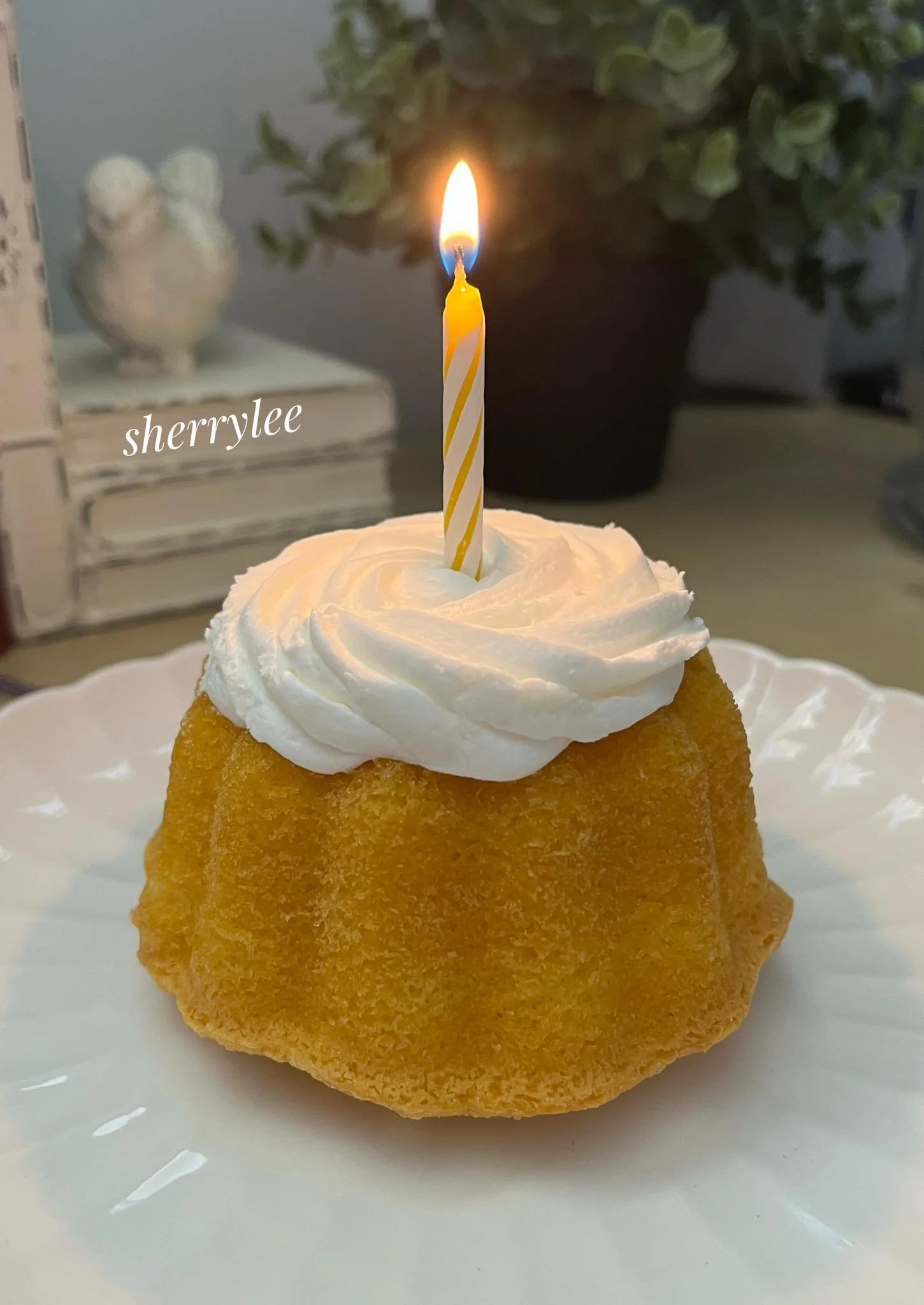
Cake for breakfast today. And a glass of prosecco after the hospital appointment to toast life. Life as it is and as it will be – whatever tomorrow brings.
Visions of Life
“There are few things that say more about a person than her vision of life: whether she sees it as a road, a battlefield, a growing tree, or a rolling sea.”
~ Karin Boye, Swedish writer 1900-1941
This quote of Karin Boye’s was shared by Matthew Dowd on his social media page (matthewjdowd@bsky.social) where he posts memories and quotes every day about and by people who were born or passed away on that date. Matthew is what I refer to as a disciple of inspiration.
Karin Boye, a Swedish novelist, and poet did not have a decades long life, but she may well have experienced the breadth of her life in a short span of time. I’ve noticed that about those in my life who have died before the age of forty. As if they knew they were not here for a long ride, they charged ahead to fill the hours with adventure, experience, and nourishment for their spirits. They blazed a trail taking risks and daring themselves with new adventures, the rally racers in my life who left me in their dust – gone before the clouds had disappeared, leaving loving memories in their wake.
From these words, Karin gives the impression that she viewed life with philosophical reflection. Or it was simply a poetic moment that seemed destined to be expressed in words. I have no idea which of these visions was the one with which she viewed her own life but, as I’ve read and re-read the quote, all four may have been true for Karin at various times in her life.
I’ve experienced life through all four of these views at various stages of life.
As a battlefield experienced throughout my early childhood in a home where I was trapped unarmed in the no-man’s land between two parents constantly at war; and as an adult on the battlefield of cancer treatment where my early years learned warrior instincts carried me through.
As a growing tree when I gave birth to my children and tended to them as the fragile saplings they were, nourishing them to develop and strengthen into the trees they are becoming themselves, planting their roots with hope for future generations. As I’ve aged and learned about life through lessons both easy and profoundly difficult, always stretching towards the light, gaining knowledge and wisdom, I’ve strengthened like an old oak tree.
As a road where during that cancer treatment I walked the path that was laid out in front of me, offering my body to doctors to fix and repair, going where I was told to be and at what time, proffering my arms to needles and cocktails in syringes and glass bottles. But the road had an end, where I was set free by the medical establishment and my view, clouded by having my life turned upside down left me with no idea which way to turn next.
Every choice we make takes us down a road. Some roads might lead us to a dead end, and we can stay there or we make a U-turn to find a fork in the road that will hopefully lead us to our destination. People come and go on that journey we make down the road of life. The road might remain straight, or it might take twists and turns. Most lives consist of twists and turns. The key is to keep moving to see beyond the next bend to what lies ahead. Sometimes we can prepare ourselves for what comes next, other times life forces us into situations that we could never have seen coming or prevented. The important thing is to keep looking forward and not to pine for what we left in the rearview mirror. Life is all about forward momentum.
Life is a rolling sea. There are days of calm when peace surrounds you and the stillness of the water soothes the soul. And just as suddenly a storm can gather in the distance creating waves that can overwhelm, that can sweep you away if you don’t know how to hold your balance. Oh, but the rolling sea can take you to distant shores and new adventures if you’re brave and if you dare to leave the shore to experience what life might hold in store. Planting roots as a giant oak means standing still. Setting sail to expand your horizon is freedom to grow – tasting the salty air, feeling it on your skin. And the realization that if just one of my grandparents had never set sail for Canada on the rolling waves of the Atlantic I wouldn’t be writing this.
How we view life is based on our experiences, the challenges we face and the times of peace and joy that bring calm and serenity.
Wondering about Karin Boye and her death at such an early age, I did a brief search. What I learned confirmed what I suspected given the choices of tumultuous possibilities she penned – “battlefield” and “rolling sea” – angst, movement, anger, turmoil associated with a battlefield and who might she have been fighting – the world – or herself? The difficulties of life as imagined in a rolling sea. The unpredictability of life as seen through the surges and ebbs, riding the waves until hopefully calmer waters can be reached.
Karin Boye died by her own hand. Taking sleeping pills with her, she left the house and chose a final resting place. A farmer out for a walk days later discovered Karin curled up on a boulder near a hill with a view of Alingsas the city in Sweden where she had been living at the time. Karin Boye’s own vision of life was not the one that I embrace - that despite hardships and difficult moments it does go on, but as a pain too difficult to bear.
As for Karin Boye’s words, she was either wise beyond her years or fighting her own demons when she opined that there are few things that say more about a person than “their” vision of life. I expect it was both.
Not Ready for Primetime
Was it an image or a word spoken, or maybe it was a commercial for some product I won’t ever need to purchase – whatever “it” was, a memory flipped to the forefront of my mind, sending me back in time to age 13 and 14. And a friend from that time period who I lost daily contact with when we reached high school and found separate tribes that spoke more to who we were and who we thought we were becoming.
In our junior high school years, “R” and I met because we were both enrolled in the instrumental music programme for our three year “tenure” (torture would more aptly describe the time at that particular school – neither of us happy with the system or the discipline instilled in students – male and female, though to be fair, the males suffered much worse than the females). We both played the clarinet – she was third chair and I was second (though I did graduate to first chair by grade 9). My friend “R” was a bit of a rebel – bent the rules without a care, and was disdainful of the teachers, one or two still come to mind. That meant suspensions on occasion, not being allowed to make the school trip to Ottawa in grade 8, and she was denied the opportunity of being in the school band for the two years that the rest of us took part in.
Every year in early May, the school staged a revue to highlight the arts. Students who had talents were invited to perform, two plays were staged and of course, the band was there to accompany as well as perform all the wonderful music we were creating (none of it current, all of it obscure to 13 & 14 year olds – “Finlandia” by Sibelius is permanently planted in my memory). “R” being unable to join us in “the pit”, decided that she would perform ON the stage and both years she played key roles in the student productions.
I had never had any desire to be on the stage. Acting held no appeal. It was enough for me to be part of an ensemble and while students who were in the band were discouraged from taking part in the plays, one or two were given permission to do so. Encouraged by my friends to audition for a role I demurely declined, leaving them to the greasepaint and the glory. As outspoken as I am now, I was the shy, quiet girl who really didn’t want all eyes trained on me.
Over the last few days since that memory surfaced I’ve thought about the number of times I’ve said throughout my life “I could have been an actress” – and meant it. Not because I’ve wanted fame or to be noticed – I’m thinking about the number of times over the years that I’ve worn a “mask” and pretended either that everything is just fine or to give myself courage to step out of my comfort zone. The donning of another persona to hide or “fake it until I made it”. In fact, most of us are actors at some point in our lives. I think of people in my life who have presented one face to the world at large and yet had a very different face inside the home.
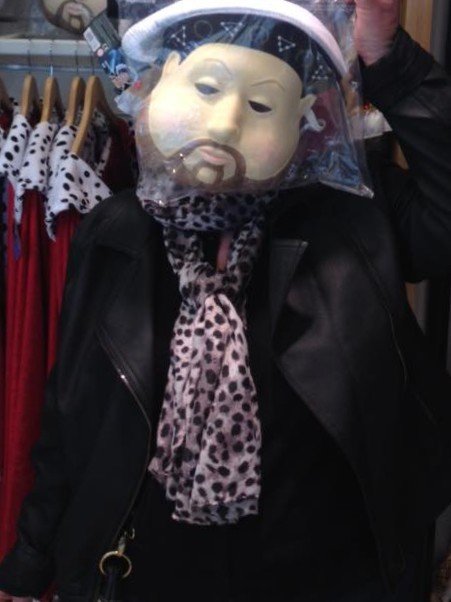
Photo of me (not Henry VIII) taken at the Tower of London, April 2015
I think about the stories I’d read my children at bedtime or when I volunteered in the kindergarten. The characters in the books all had different voices and personalities and as I’d read, I’d act them out, bringing to life the flat characters who appeared on the page. I did that not only to make it entertaining – it was in my view a way to encourage children to want to read for themselves and discover the possibilities that the words on the page and the illustrations provided.
By the time we reached high school, “R” no longer acted in productions and neither of us stayed in the instrumental music stream. Playing the clarinet was decidedly “uncool” for a 15-year-old girl who had discovered new pursuits. “R” left school at 16 as soon as she was legally allowed. Discouraged with formal education, she went off to discover what the adult world had to offer. We lost touch permanently soon after that. She was working in an office with people some of whom were much older. I made new friends, taking trips abroad and discovering adulthood in a different way. I wonder how much of “R’s” life in her adult years was “put on”, what masks she wore and if the experience she enjoyed in her early teens carried her forward throughout life. I rather hope it did.
Weekend Glimmers
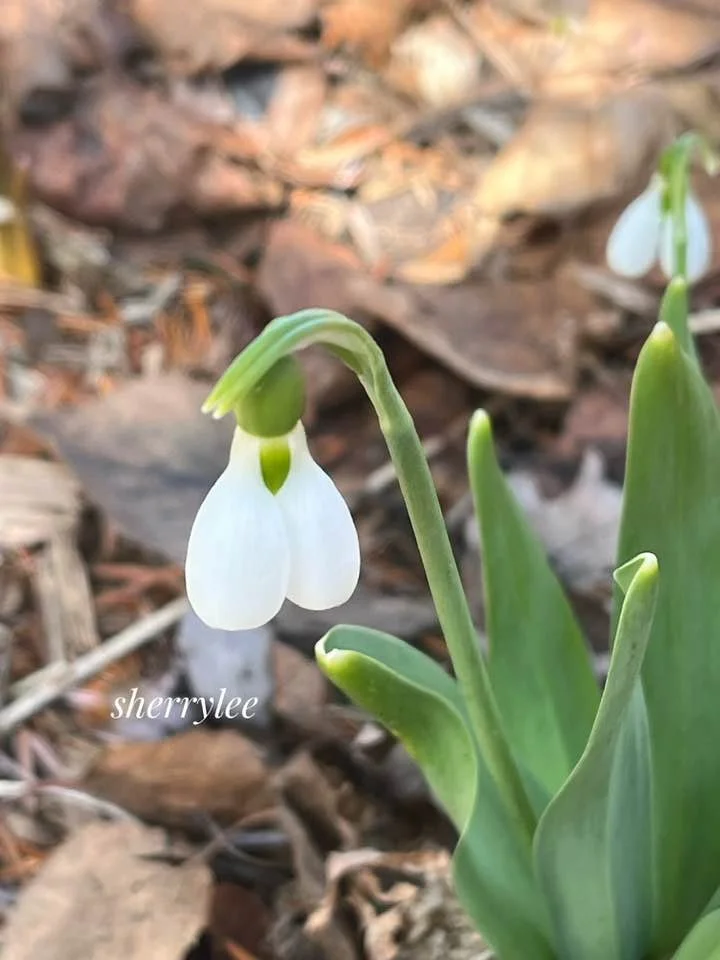
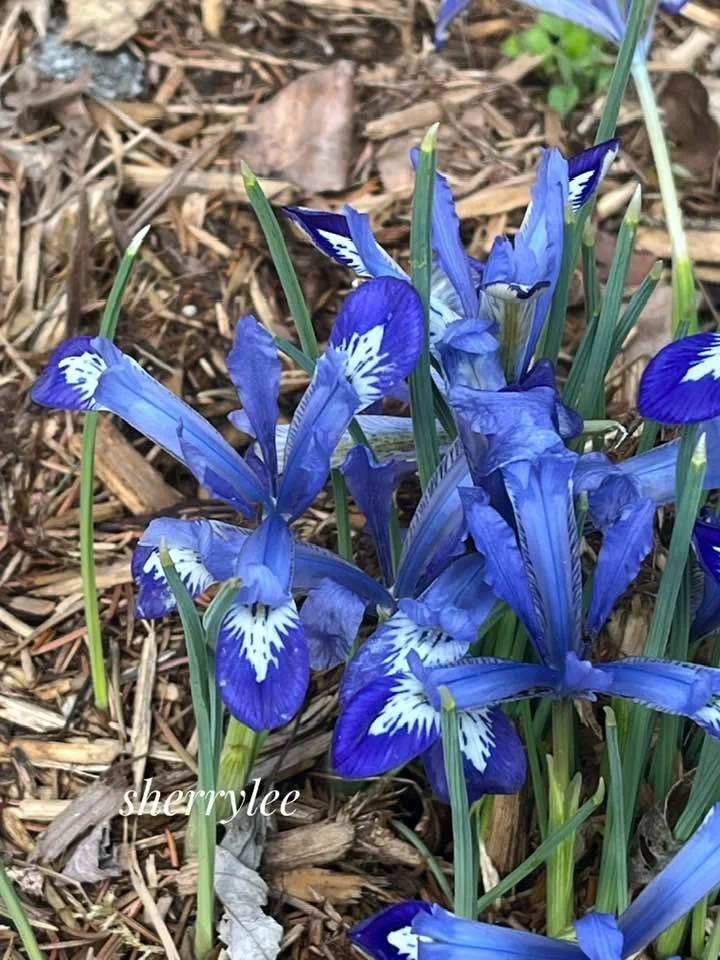
Moments in the day that caught my eye. The things that made me stop for a moment, pause, reflect, made me smile. Some of the photographs appear more like art in their depth and the colour. I like that effect. After all, photography is an art.
From the first coffee of the morning as I stood in the garden, casting my own shadow, and listened to the birds.
To a walk in the local park, looking at the spring blooms poking their heads out, up towards the sun.
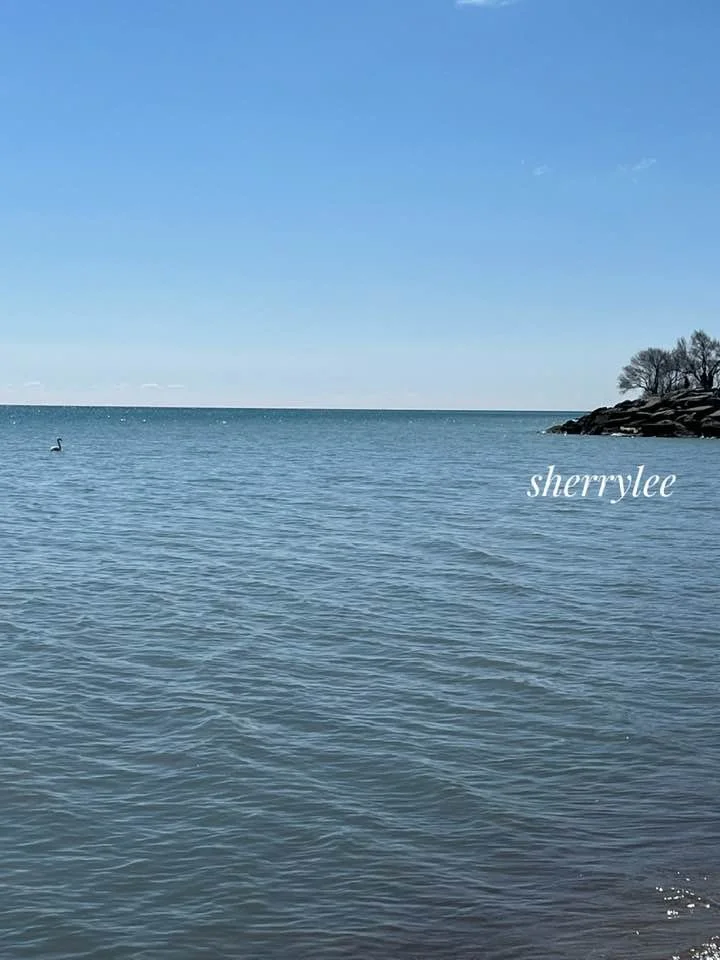
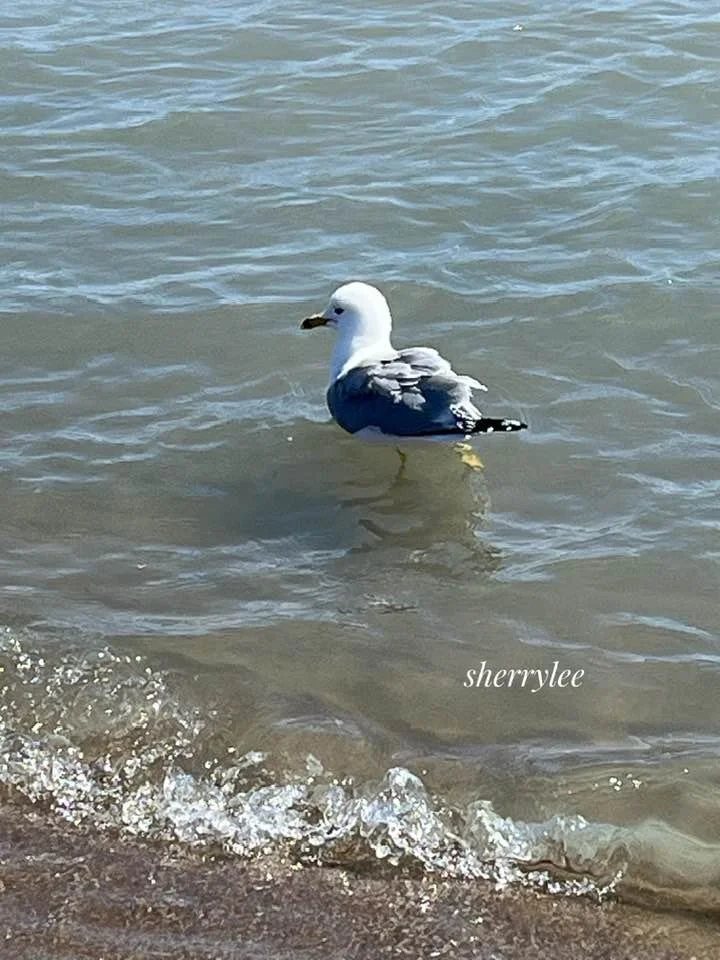
To the beach, to walk along the sand, listening to the susurration of the waves. Watching a swan swim silently and regally through Lake Ontario (I think of that as Swan Lake), not a care in the world. Even watching a seagull, who tried to appear nonchalant, but perhaps wondering if there was a crust of bread or a french fry in my pocket.
This is me. Making moments into memories.
Eye Spy
Order and routine provide an organized balance in my life that keeps me on an even keel, although there are times when I welcome a little spontaneity. When it comes to appointments however, a spontaneous rescheduling, especially one where I only receive a voicemail message to “inform me” that this is taking place, and not a person-to-person telephone call that allows me to interact and say “actually, that doesn’t work for me” isn’t one of those times. That being the case, when it happens I “go along, to get along” not because I’m a passive personality, but because it makes life easier. That was me this week. A stressful doctor’s appointment that I’d been thinking about for weeks on Tuesday and a rescheduled retina clinic appointment from the previous Friday moved to Wednesday. In retrospect I might have been better to ask the clinic for a new date. I’ll know better another time. Learning from my mistakes.
I like the retina doctor – young, funny, easy going. I don’t love the injections he often has to do in my eye because of spontaneous (there’s that word again) leaking behind the retina (like a tap that needs a new washer). The first time he explained the procedure I was reluctant but knew it needed to be done so I resigned myself. No waiting – he did it right then and there. Surprisingly it’s not painful – the numbing drops help a great deal. Quite often afterwards there is “bruising” and the white of the eye is beet red, as if I’ve gone a round or two in a boxing ring, but the bruising fades. Eventually.
The worst part of these appointments is reading the eye chart. Put puffs of air into my eyes. Check. Add drops to dilate the pupils? We’re good. Push my chin into the “cup” and press my forehead against the bar and take a scan of my eye? Uncomfortable but doable. Poke a needle into my eye? Easy. Read that eye chart as the print gets smaller? I freeze. It’s like taking a test I’m sure I’m going to fail. I feel performance pressure. And I’m doing it with my glasses ON, not off.
On a good day I can do this with no difficulty though towards the end it’s a crap shoot of guesswork - “it might be c, but it could be o.” I might just laugh and say “pass”. Yesterday the pressure of sitting in that chair, stressing myself over a few rows of letters becoming ever increasingly smaller, I wanted to get up out of the chair and leave. I felt myself becoming smaller with each attempt. I was sitting with a different young woman to the one who usually conducts this part of the appointment. She was polite but a bit condescending when after assessing one eye I told her I’d rather not do this today. She kept insisting, as if I were a toddler, trying to encourage me to take just one more bite of liver or brussels sprouts – “can you just try one, maybe the first letter or the one at the end?” That made me feel even smaller. My final, unfortunately emphatic response, just like a toddler, was a firm “no.”
It was at that moment that I realized how incredibly overwhelmed I was. The level of stress that I’d held in for weeks had run its course and the lowering of it left me feeling vulnerable and on edge. I apologized to that young woman for being difficult and unyielding, but it was my final answer, and I saw no need to put myself through further stress with the eye test.
“You may not control all the events that happen to you, but you can decide not to be reduced by them.” ~ Maya Angelou
There is a time to be compliant and I’m good with that. I tell technicians, nurses, doctors that if they need to move me or put me in a specific position they have my permission because it makes it easier for both of us. I don’t always look forward to the tests I need or what they involve but the necessity overrules any reluctance. It’s the small details, the simple things, like an eye test that can reduce me to a petulant outburst or tears. Or even saying “no, I don’t want to.” It’s a way to take control of a situation when I’ve felt things slipping out of my hands that might be bigger than I’m able to manage.
On a positive note, it turned out that I didn’t need an injection this time and I’m “free” for two months. I can laugh about this today, but I have an optometrist appointment next week. Another chance to get it right (or wrong), another tussle with an eye chart, this time without the benefit of my glasses. I’ll leave the toddler at home for this one.
Modest? Moi?
There I was early Tuesday morning, perched on the examination room bed, legs dangling, feet not touching the floor, wrapped in the blue hospital gown I’d donned after being instructed by the nurse, “everything off from the waist up, and tie at the front.” Duties completed, she wandered off out of the room after that brief exchange, leaving the door wide open and me questioning under my breath “is this some new protocol leaving the door open?” I didn’t even bother to close it and managed to perform the necessary act with a shrug of the shoulders.
Enter the world of the hospital breast clinic and a woman – me – who has spent too many years on one of those beds, wearing one of those gowns, with a variety of doctors and technicians doing what they do, cold hands (always cold hands!) pushing and prodding. My modesty left the building in May 2005. I became oblivious to prying eyes after too many appointments to count where the first line from every nurse was “everything off from the waist up.” I’ve also lost count of the number of times I didn’t even bother doing up the ties on the gown provided. Yesterday was no exception, though a vestige of remembered modesty did have me holding the gown together until the doctor arrived. Afterall the door was still wide open and there were people walking the halls.
Meeting a doctor for the first time I find it hard to just sit there and let them do all the talking. It’s my appointment so full participation is, as far as I’m concerned, my time to shine with all that I know, think I or know, don’t know at all and want to know. At the same time, it is an opportunity for me to assess who this person is, do I feel comfortable in their care and will I have the confidence in their ability to not only “know their stuff” but to see me not simply as a patient but as a person. It’s part of deciding if we are a going to be a good fit.
The young woman who walked into that examination room and greeted me yesterday would at a guess have been a university student when I entered the world of breast cancer 21 years ago. She might have been deciding if medicine was truly the course that was right for her only a few years into her studies.
I arrived at this appointment with an open mind and came prepared with dates, information and questions. I had already completed the intake form – to the best of my ability – some of the questions had me digging into the archives – the exact date of my lumpectomy? June 2005 but the exact date? Not to worry said my new doctor – it will be in the files. True. Everything on that questionnaire would be found in my files but I suppose it gave me something to do while I had been waiting for her arrival.
We chatted while the doctor conducted her physical exam – she asking me questions as well as me asking questions of her and I knew I was in good hands – literally and figuratively.
Upon completion I heard the words I had anticipated and expected to hear – “This is not a recurrence of breast cancer, and it is not a new cancer. It is an infection that has left some lingering fluid.” Two follow up diagnostics will be scheduled to confirm her diagnosis.
As the doctor was writing up her notes before the conclusion of our appointment, I mentioned to her that during the few weeks I’d been waiting for this appointment date, I enrolled in Google University and conducted my own research. When she laughed aloud I knew that this was someone if I should have further contact with that I would be able to trust with my life. She listened to my self-diagnosis of a fat necrosis*, rolled her chair over to where I was still perched on that bed and showed me the findings she had printed out from the ultrasound I’d had in early March that read “inflammation due most likely to fat necrosis.”
My self-satisfied yelp of “I was right!” had me confidently proclaiming, with laughter, “I think I just graduated with my University of Google degree in medicine.” With a wink and a smile, the doctor complimented me on knowing my own body and being proactive with the questions I ask.
That comment was ringing in my head as I almost floated with relief down the hallway to the hospital exit.
I don’t always have the right diagnosis when I search for symptoms. I have no medical qualifications. What I do have is common sense, an awareness of when something doesn’t look the way it should, or something feels new or unusual. I never meet with a doctor that I don’t have questions, and I don’t trust myself to remember all the things I want to know or the things I need to mention. I will write down symptoms and changes. I write down my questions, and I don’t leave an appointment until I have answers, sometimes even asking the doctor to write down specific words I might forget upon leaving the appointment. I might not always like the answers but I’m going to ask the questions.
The interaction at that appointment lasted approximately 10 minutes but in that brief time I was able to assess the doctor’s bedside manner, her thoroughness, her confident ability to assess and diagnose, and her ability to laugh. Most importantly she took the time to listen to me, she looked me in the eye, and she saw me as a person, not just a woman sitting on a bed, holding a blue gown clutched together with one hand.
(*Fat necrosis in this case caused by surgeries to the breast, plus radiation treatment. Damaged tissue that due to trauma had become inflamed and an infection presented.)
Waiting
I have never been a fan of Tom Petty’s music, not for any specific reason. That’s not true - it is his voice. I’m particular (some would say fussy, annoyingly so – and they do say) about voices. Bob Dylan springs to mind at once. Neil Young. Carly Simon. Stevie Nicks. Robert Plant. Tom Petty. And while I might not have an ear tuned to their frequency, I won’t deny that some of these artists are poets and their song lyrics are often deeply meaningful.
Take for instance “The Waiting” by Tom Petty. These last few days the chorus of that song has been running through my brain like a viral ear worm. I never really listen to this song because as soon as it is next in the queue on the car radio, I switch to another channel. Despite my pushing it away, over the years, that specific chorus has infiltrated my listening ears.
“The waiting is the hardest part
Every day you see one more card
You take it on faith, you take it to the heart
The waiting is the hardest part” ~ Tom Petty
I wondered what he was thinking when he wrote that song. I know what it means to me today, and for the last few weeks. What it has often represented to me at times of needing to wait for something. Not a gift or a birthday or a celebratory holiday – the waiting for news, good or bad. The waiting to find out “what next”.
I’m off tomorrow to have a mammogram – the second in almost three months. The first was fine, no evidence of disease. And then in late February something changed. It was an infection that was treated, however, my doctor, thorough as she is (and I’m grateful for that) wanted to know “why” this happened. As did I. An ultrasound showed inflammation that was considered “undetermined” and a recommendation for a mammogram for further information. I have no problem with that – I would rather know exactly what is happening.
I’m sanguine about all this. Or trying to be. I want answers and if there is further testing to be done after this mammogram, so be it. I’ve been down this road before although after twenty years, the terrain has changed and there have been a great many improvements and advancements. That’s good news. I hold on to that.
I’m an optimist and I always look for the silver lining. I am also a realist. I put my trust in professionals and experts, and I tackle obstacles head on.

But it’s the damn waiting. Waiting for tests. Waiting for results. Waiting to know if this is a situation of waiting for the other shoe to drop. The waiting to get on with the other things in my life that are “waiting” for me to deal with. That feeling of being stopped in your tracks. A reminder that you cannot pass “go”. The longest red light as you wait for it to turn green.
I’ve filled the time (almost 4 weeks) with other thoughts and other activities. Keeping my mind occupied with laughter and happy moments. I’ve been seeking glimmers of joy and sharing those moments with others. I’ve continued with my regular routines and taken moments to do something spontaneous to be “in the moment”. Other things have been set aside until I know what comes next.
Waiting IS the hardest part of this. I’m taking it on faith that whatever card is played to me tomorrow morning I will at least have peace of mind because the wait is over.
Showing Up
Yesterday as I was having my morning coffee I thought about the things that you don’t see coming. It might be unpleasant or unhappy news, conversely it could be something exciting or pleasant. And then shortly afterwards I received a telephone call that I didn’t see coming.
The call was a reminder of an upcoming medical appointment – that was something I could foresee. It was the added wording of the message that threw me for a loop. Language that anyone who has had cancer doesn’t want to hear. Language that anyone going through the labyrinth of medical appointments, hospitals, tests and terminology doesn’t want to hear. At the mention that after this procedure and that exam “there would be no biopsy done that day.” I froze. I’d had no idea that a biopsy was even being considered at this stage. Was this helpful voice on the other end of the phone just outlining the usual procedure that would be followed? We chatted a little more and while the woman might have thought she’d put my mind at ease, I expect she disconnected wondering if she had compounded the thoughts that had already been swirling within me for the past month. The following few hours were spent running every possibility through my mind. If a biopsy should be thought necessary for further clarification I absolutely want to have that done. There is no question about that. I just hadn’t given it due consideration.
What that phone conversation did was remove the comforting bubble wrap I’d swaddled myself in – the self-protection that allowed me to believe that whatever it is my body is doing that it ought not to be doing and certainly doing without my permission though with my participation. It forced me to seriously address the fact that this is something more serious than I had hoped.
I have no way of knowing what is happening until I see a specialist who can read diagnostics and decide what has caused this latest anomaly. No amount of worry, stress or overthinking - no matter how natural response that is - will change or affect the outcome.
I read this meme on Instagram last night and saved it so I would remember the wisdom.
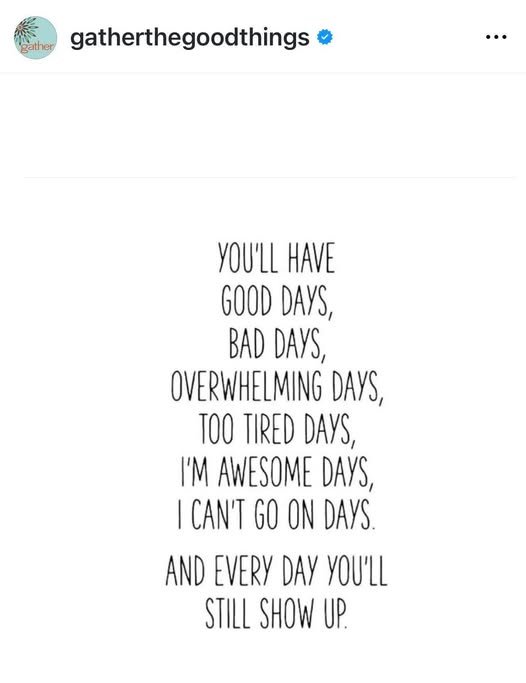
That overthinking, over analyzing, that worry serves only one purpose – it steals peace of mind. It allows no room for joy, or laughter. It takes up precious time that could be spent with loved ones or pursuing hobbies that offer pleasurable moments. It replaces gratitude with fear and anger.
As I went out this morning to mail parcels for Easter to loved ones far away, I saw a robin sitting on the car. It then flew to the iron shepherds crook that sits in the garden, the one that holds a very old, weathered birdhouse. Every spring I watch a chickadee family assume residence and I wonder if this robin has decided it’s the ideal spot to raise a new family. The house is small and the hole is tiny. Ideal for a chickadee. A robin not so much. As I watch, I think to myself “you’ll never fit in there.” And yet. Do I know for a fact that this is not possible?
As I’m writing this, the robin is still flying about, pensively watching every time it lands – on the roof of the car, up in the tree under which sits that birdhouse. Back to the top of that shepherds crook as if staking a claim to tenancy. It isn’t overthinking the probability of making it work. It isn’t second guessing the decision it seems to have made. There is no time, there is “now” and getting a nest ready for nature to take its course.
Robins build their nests outdoors. They are “not cavity nesters” according to Emily Hannemann of the Birds and Blooms website which leads me to wonder why this bird has spent so much time hanging about this birdhouse and in fact, this house today.
Thehumblehare.co.uk had this to say:
For many of us, the robin has come to represent a spiritual connection with loved ones who have passed away. It’s a common belief that a robin appearing nearby may be a sign that a departed soul is watching over you. This sentiment is captured in the popular saying, “When robins appear, loved ones are near.”
That robin has certainly caught my attention. No matter what the next few weeks or months hold, I’ll face it one step at a time and take my cues from that robin whether it’s building a future or its presence is a reminder that though I can’t see it, I still have that bubble wrap around me. I can let go of whatever is out of my control. And I’ll still show up. Every day in every way. There’s comfort in that.
When The Ancestors Speak
22nd of March. I wandered around for about an hour yesterday with the date running through my mind, trying to figure out why it felt so significant and then it came to me like a download from stored knowledge. It is the anniversary of my maternal grandmother’s death. A woman I did not know who died 3 years before I was born, but someone whose spirit has guided me and has often given me a little shove to keep moving.
As the historian of my branch of the family and one of two genealogists in the clan, I know more about this woman from photographs and my ancestral research than I would have known had she and I spent time together. But those are just facts. I have no way of knowing what she thought about her childhood in Scotland, about her mother, her siblings, her life. I don’t know what my grandmother’s voice was like, or if her Aberdeenshire accent faded with the greatest part of her life spent in Canada. I don’t know how she took her tea or what scent she might have worn. I know she was a basic cook having heard my mother often complain about how bland and unappetizing meals at their table were. I’d laugh when she’d say that because my mother was no culinary expert herself, but to her credit she never served us boiled marrow or overcooked celery, two of my grandmother’s specialties. I know certain Gaelic words and expressions she would use because my mother used them and I in turn use them as well. Superstitions? I know them all by heart.
My grandmother passed away in her early sixties from metastasized breast cancer to the liver. That was part of the family lore my sister and I knew and felt deeply.
When diagnosed with my own breast cancer and asked the question – “is there a history of breast cancer in the family?” I was told by all the doctors who were part of my team that my maternal grandmother was not a direct enough link to connect this as “family history.” There is no way to know if my mother or my sister would have developed the disease as both died at early ages. I was then and am still convinced that there is a connection.
There was a point during my treatment when I was tired. Weary. Exhausted. Physically, the toll of chemotherapy and radiation is wearing. Weeks and weeks of hospital visits, first for surgeries, then being poked, prodded and examined. Bloodwork every time you have chemo to be sure your white cell count is high enough (I was blessed to pass “go” each treatment). The hours of sitting in the chair while the toxic cocktail of hope drips into the veins, too tired to read because of the Benadryl you are given to prevent any allergic reaction. The brief session of laying on that “table” being “zapped” with radiation and the damage to the skin. Thirty times for that. Then there is the emotional toll. That was ongoing, long after treatment ended. All this weighing on you, body, and soul, while trying to remain upbeat, chatty, and positive because other people are depending on you. While you are relying on yourself – your inner strength and resolve and the courage to keep going. I never wanted to give up or cry out, “I can’t do this, this is too much,” but there came a time when I reached my lowest moment.
That night I had a dream. My grandmother had a message for me. In the dream, I was on my stomach, on the floor – symbolizing that exhaustion. It was an old, time worn wooden plank floor in a cabin. I knew that old cabin – it was one that my grandparents owned when they had cabins/cottages that they rented out to summer vacationers in the Haliburton area of Ontario. I spent a few summers there with my grandfather when I was a child before he sold the property.
There was a hole in the floor with jagged edges of splintered wood as if a boulder had crashed through, or a sledgehammer had pushed through from below. My grandmother was standing just underneath that hole and behind her were my mother and my sister. Not a word was spoken by these three women. Suddenly, my grandmother grabbed me and began to pull me down through that hole. I could feel her cold hands and the vicelike grip she had on my ankles. Panic set in and I struggled to break free. It was a test of our strength and our wills. Just before waking I shouted at my grandmother - “you have them, but you’re not getting me, not yet. I’m not ready.” The hands released and I sat bolt upright in a cold sweat. The message? Give in or keep going. The choice was mine.
I thought about that dream again last night – a 20-year-old dream being revisited on the anniversary of my grandmother’s death. A download I needed to be reminded of as I’m waiting to find out what comes next in my most recent health journey. When the ancestors speak – even though there are no words - they are sending a message worth listening to. I cannot predict what my body is doing right now and I will not know anything more until I have facts. But I know this. I’m still here, still strong, and still ready to keep going. I thanked my grandmother for the reminder.
The Ritual of Tea
A kitchen table and sitting always in the centre, a hot pad, ready and waiting for the teapot that had just been filled to take it’s rightful place, a tea cozy to be wrapped around it to keep the heat within. That cozy might be lovingly hand knit or it might be quilted. Quite often, if quilted it was first placed upon the head of whichever child (or adult in some cases) was given the cozy to place around the pot, as a moment of laughter while pretending to be the Pope.
That scene played out on a regular basis like a ritual as I grew up. It happened in our kitchen, our neighbours’ kitchens and in the kitchens of my step-grandmother, every aunt and great aunt. It didn’t happen at “teatime” specifically, it happened whenever someone just happened to pop ‘round for a chat or a natter and perhaps a bit of gossip to be dished over. It was the scheduled visit to an older relative. There was never any question asked, “would you like a cup of tea?” – it was a given. Upon arrival, the kettle was filled, the gas lit and the tea ready to be added to the warmed pot.
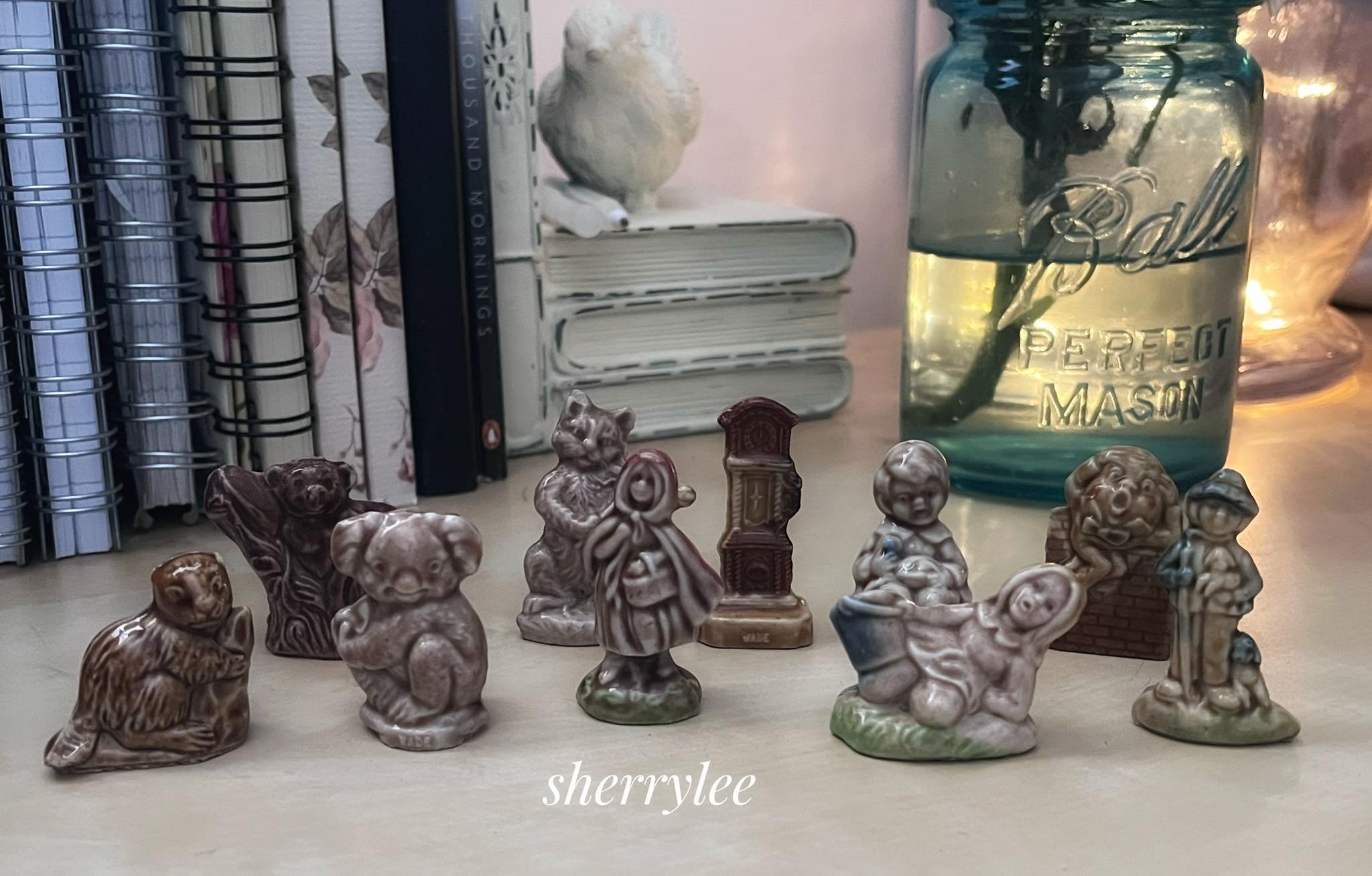
In my world it was rare to have loose tea, but older relatives preferred it. There was one great aunt who would read the leaves left in someone’s cup if they asked her nicely. I was too young to have my tea leaves read but hoped that one day, the magic would be offered to me if I asked. Alas the opportunity never presented itself. I’m still waiting. It was always tea bags that went into the pot in my home – Red Rose was the favoured brand, and my mother collected the little figurines that came with the tea as a promotional item. As children, my sister and I would pull them out of the drawer they were kept in and play imaginary games. Years later my own children would do the same when visiting their Nana and the figurines (animals and nursery rhyme characters) now sit in a drawer in my own home. Today is the first time I’ve pulled them out and really looked at them. But I digress. This is about tea, not collectibles.
I sipped my first cup of milky tea at age 2 while visiting older relatives. I don’t recall that, but photographs captured the moment. As I was growing up, I realized what valuable information could be learned as a young child with big ears, sitting quietly when being invited to sit at that table with more milk than tea in a cup. It was the initiation into the rite of drinking tea.
Sipping tea wasn’t just for a chin wag or family time sitting around the table. It was some magic elixir served at times of distress or worry. A problem presented and the first act was someone saying “we need a cup of tea.” I’m not sure that the tea itself held the solution to the problem, but it offered comfort and respite and those moments to gather oneself, to pour out not just a hot beverage but the worry or grief or in some cases shocking news.
“Making tea is a ritual that stops the world from falling in on you.” – Jonathan Stroud
Perhaps as Jonathan Stroud says, it is the ritual, the doing something so basic and every day as preparing tea, going through those motions that help to stabilize emotions and upsets. It is the hands held around a warm cup that soothes and comforts like a much needed hug. Or maybe it’s being with a trusted family member or friend who will let you sit quietly until you are ready to talk.
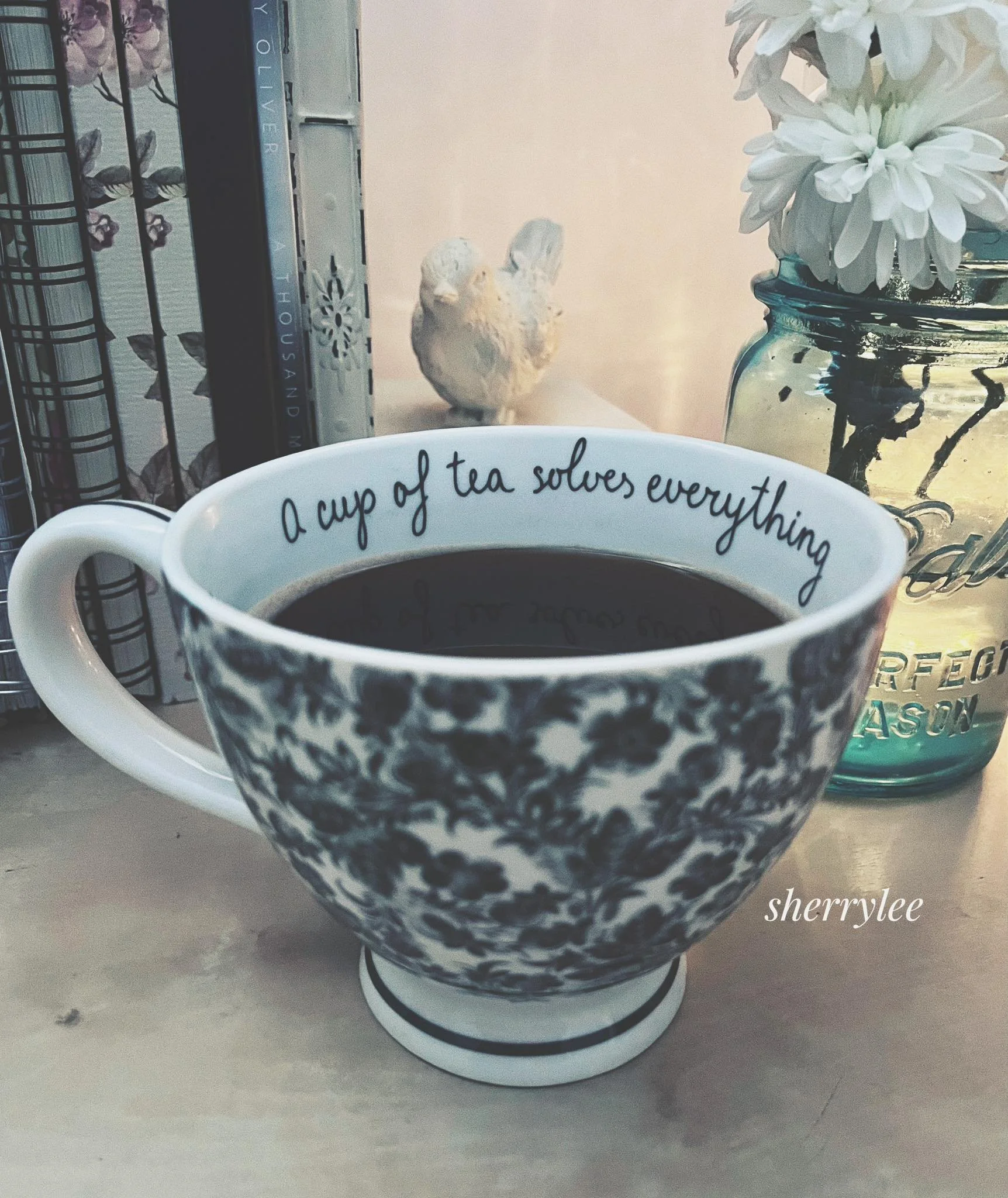
The tea and the drinking of it won’t solve the problem but it offers a moment or two to just “be” and not think, not worry, not have to have a ready answer.
I drink less tea these days and more coffee. But if I have a problem or a worry or a stress, it’s tea I’ll brew, not coffee. There are no longer any older relatives with whom I can sit at a table over a cozied teapot and ask for advice or answers. My friends are scattered and not living close enough to just pop ‘round for a cuppa. But I’ll still turn to tea. Old habits? A fondly remembered past? Or maybe, just maybe there is something in tea that really does offer the promise of being able to solve everything.
The Wisdom of Logic
Here’s a bold statement: I am not a doctor. However, like countless other people, I often play one on my computer, and why wouldn’t I when there is so much information available at my fingertips. Let’s be honest, there is too much information to sift through, getting lost in illnesses and diseases that may or may not be what is happening that sent me off on a quest to “know” why my body is behaving in the way that it is.
When I was first diagnosed with breast cancer nearly 21 years ago, the first thing my surgeon said to me was “please, do us both a favour and stay off the internet.” I smiled sheepishly because we both knew I’d already been down that rabbit hole and read all of the direst outcomes, working myself into unnecessary additional stress. I was reading less about treatments and side effects than I was about my particular staging outcomes and percentages and all the other statistics that were keeping me up at night. My brain had gone into overdrive trying to find data and information that would give me the most hope.
I’ve found myself these last few weeks wearing my invisible white lab coat, fingers tired from scrolling around the internet looking for the information to figure out what my body is trying to tell me. I’ve already seen the doctor. I’ve had one test that recommended another mammogram which I’m having in a few weeks, even though I’d just had one in January that came back “clear, no evidence of disease”. And once again the brain goes into overdrive. What is this? It looks like one thing but could be another. Days later I started another search, looking at images and trying to decipher if this or that might be at play.
This morning I shared a story of a 3-year-old who without giving something much thought, took an action that made sense to him. The logic of a 3-year-old who hasn’t the experience to know if what he did would work or not. That child didn’t need to “think” it through. He didn’t spend time overthinking his plan. He wanted something to happen, and he just “did” what made sense to him. Not only did the story make me laugh, it also made me think.
I’ve spent weeks overthinking something that may turn out to be quite simple. It may also turn out to be quite serious. Like Schrodinger’s cat it could be one or the other and until there are more tests and a definitive answer I won’t know.
Logic, which I’ve been reminded of a number of times today, tells me that my first reaction to this situation – I had a fever, chills and aches, then a swelling and inflammation – was to say, “oh I have an infection.” But within minutes I remembered “I’ve had cancer” and the brain goes where it has been before and I began a frantic search of specific types of breast cancer.
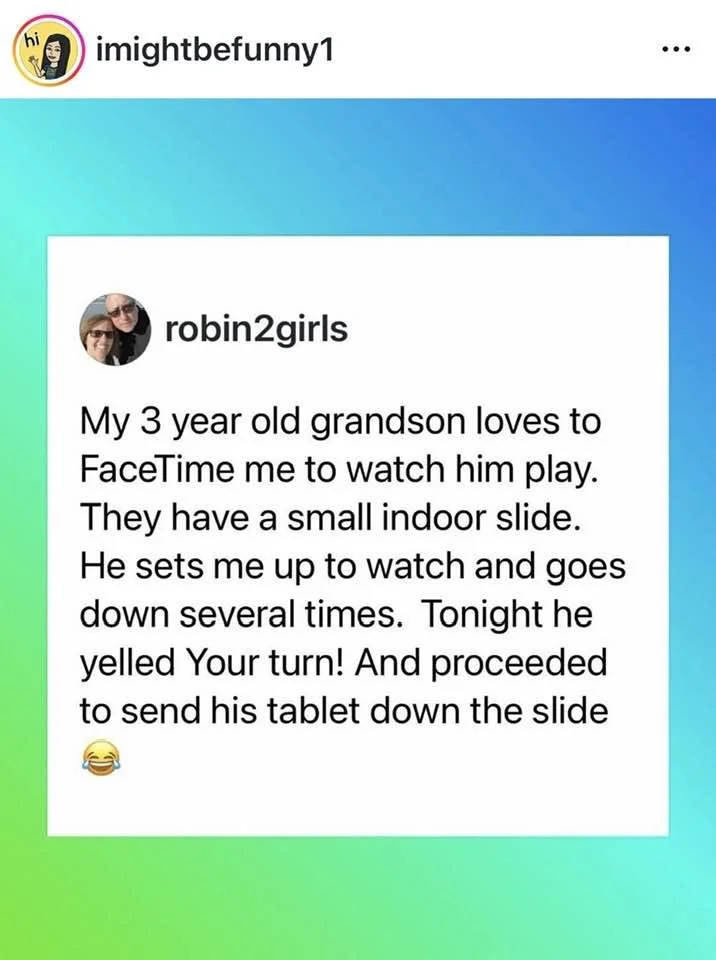
image found on Instagram
Not wasting any time, I did the sensible thing - I saw my doctor who prescribed antibiotics and further testing to be sure what we could rule out and not rule out (and I liked that she said “we”, making me part of this process and not just a bystander which many physicians have a habit of doing). The antibiotics have worked but not completely so further investigation is still called for.
Last night I started thinking about this again (hard not to). I took a step back, out of my own way and looked at this logically. I reminded myself that my first thought had been practical and straightforward. It was the reaction that was most obvious, grounded in common sense. It was the overthinking and allowing myself to be led into the mire of medical information that I am not qualified to interpret that had me questioning myself and filling my head with doubt.
Here’s what I know today. I will get through the next few weeks by keeping myself busy with other things and I have promised myself that I’ll stay away from internet searching. I’ll have the required test that will hopefully provide answers. That’s practical and logical.
Logic tells me that I will be given news by my doctor (a real, qualified physician). Logic also tells me that whatever that news is will be dealt with expediently.
And most importantly, no more overthinking. I will continue to recall the lesson that 3-year-old taught me – just take a step back and let it go.